

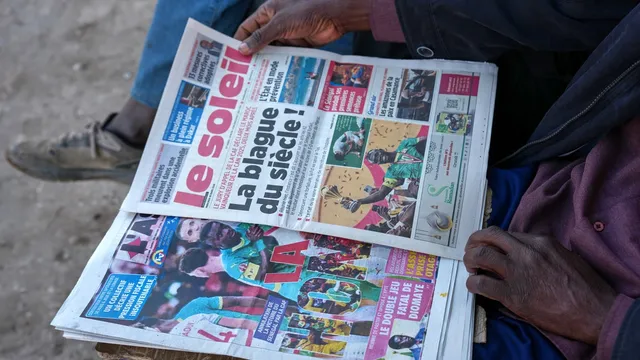
Senegal vows to fight after losing Africa Cup of Nations trophy due to walk-off
Senegal vows to fight after losing Africa Cup of Nations trophy due to walk-off
- Senegal walked off the pitch in January 2026 during the Africa Cup of Nations final in protest against a late penalty.
- CAF ruled two months later that Senegal forfeited the final, awarding Morocco a 3-0 victory and stripping Senegal of the title.
- The Senegalese government and Football Federation condemned the decision and plan to appeal it, alleging corruption.
Story
In January 2026, Senegal controversially walked off the pitch in the Africa Cup of Nations final against Morocco to protest a late penalty awarded to their opposition. Despite returning to play, they won the match 1-0 in extra time. However, two months later, the Confederation of African Football (CAF) ruled that Senegal forfeited the match due to their initial departure. As a consequence, Morocco was awarded a 3-0 victory, stripping Senegal of the title they believed they earned. This decision has faced strong backlash from Senegal, prompting the government and Senegalese Football Federation to call for an investigation into potential corruption within CAF, describing the ruling as unjust and erroneous. The football federation plans to appeal the ruling before the Swiss-based Court of Arbitration for Sport, insisting that the decision undermines the integrity of African football and contradicts established rules of fair play. This incident has further ignited discussions about fairness in sports governance and the treatment of teams in administrative disputes.
Context
The governance of football in Africa has been marred by multiple scandals that have emerged over the past few decades, undermining the integrity of the sport across the continent. Issues such as corruption, mismanagement, and a lack of transparency among football associations have persisted, leading to widespread disillusionment among fans, players, and stakeholders. The African Football Confederation (CAF), which is responsible for overseeing football activities in Africa, has faced intense scrutiny due to allegations of bribery, financial misappropriation, and failure to adhere to governance standards. Notably, several high-ranking officials have faced investigations and legal challenges, drawing attention to the urgent need for reform in governance practices within the sport. One of the most prominent cases involved the former president of CAF, Ahmad Ahmad, who was banned from football-related activities following accusations of corruption. His tenure saw various controversies, including a contentious election process and allegations that funds allocated for football development were misused. The ramifications of such scandals are profound, as they not only damage the credibility of the organizations involved but also have lasting effects on grassroots development initiatives and national leagues that rely on integrity and trust for sponsorship and investment. Moreover, the impact of FIFA's influence on African football cannot be overlooked. FIFA's various initiatives aimed at promoting the game and enhancing governance standards in member associations have seen varying degrees of success. While some programs have been beneficial in promoting transparency and encouraging fair play, others have inadvertently supported the status quo of corruption due to a lack of rigorous implementation mechanisms. The intertwining of politics and football in several African nations also complicates the governance landscape, as political interference in football administration has historically led to instability and further corruption in many federations. As stakeholders push for reform, there is a growing recognition that a comprehensive overhaul of governance structures is imperative for restoring trust in African football. This includes enforcing stricter regulations on financial disclosures, establishing independent oversight bodies, and providing education and training for officials on ethical practices and governance. Additionally, engaging fans and civil society organizations in advocacy and oversight efforts could serve as vital components of a broader strategy to promote accountability and integrity. In summary, addressing the governance issues within African football will require collaborative efforts and unwavering commitment to systemic change, enabling the sport to thrive and regain its rightful place in the hearts of millions across the continent.


