The Israel-Hamas conflict is a complex and multifaceted issue rooted in historical, political, and social factors. The origins of the conflict can be traced back to the early 20th century, with the rise of nationalist movements among both Jews and Arabs in the region of Palestine. The establishment of the State of Israel in 1948, following the end of British mandate, led to the first Arab-Israeli war, resulting in significant territorial changes and the displacement of hundreds of thousands of Palestinians, an event referred to as the Nakba, or "catastrophe". This historical backdrop set the stage for ongoing tensions and violence between Israelis and Palestinians, particularly as the Palestinian Liberation Organization (PLO) emerged in the 1960s, advocating for Palestinian self-determination and resistance against Israeli occupation.
Hamas, an Islamist militant group, was founded in 1987 during the First Intifada, or Palestinian uprising, against Israeli rule in the occupied territories. The group gained popularity for its social services and its hardline stance against Israel, positioning itself as a resistance movement. In 2006, Hamas won a majority in the Palestinian legislative elections, leading to a power struggle with the Fatah party, which governs the West Bank. This division culminated in Hamas taking control of the Gaza Strip in 2007, resulting in a blockade imposed by Israel and Egypt, which has severely restricted the movement of people and goods, exacerbating humanitarian conditions in Gaza.
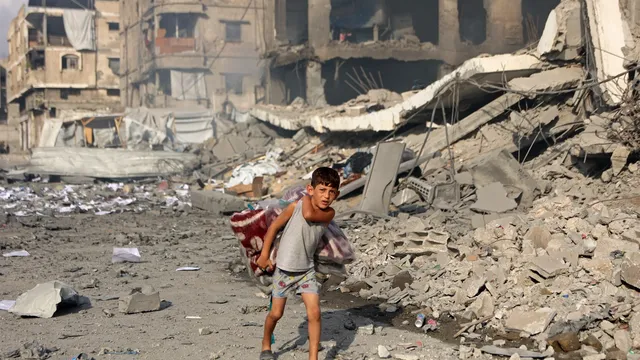
The conflict has been marked by cycles of violence, including several major military operations by Israel in response to rocket fire from Gaza, and retaliatory attacks by Hamas and other militant groups. Notable escalations include the 2008-2009 Gaza War, the 2012 conflict, and the 2014 Gaza War, each resulting in significant casualties and destruction, particularly in Gaza. The humanitarian impact has been devastating, with thousands of Palestinian civilians killed and injured, alongside significant Israeli casualties. International efforts to broker peace have repeatedly stalled, with key issues such as borders, the status of Jerusalem, Palestinian refugees, and security arrangements remaining unresolved.
In recent years, the situation has continued to evolve, with periodic flare-ups of violence and ongoing tensions. The normalization of relations between Israel and several Arab states, as seen in the Abraham Accords, has shifted regional dynamics but has not resolved the core issues of the Israeli-Palestinian conflict. The humanitarian situation in Gaza remains dire, with high unemployment rates, limited access to clean water, and inadequate healthcare. As of 2026, the prospects for a lasting peace remain uncertain, with deep-seated grievances and mutual distrust continuing to hinder dialogue and reconciliation efforts. The international community continues to call for renewed negotiations, emphasizing the need for a two-state solution as a viable path toward peace.