

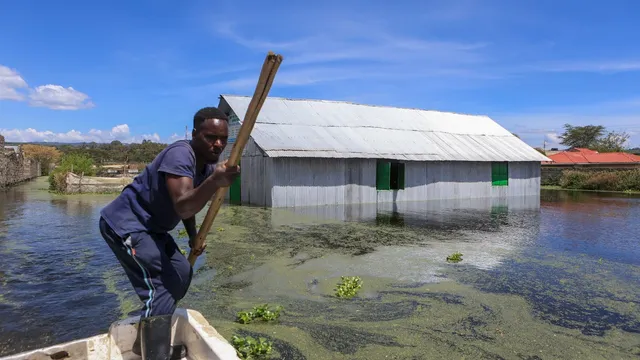
Flooding displaces tens of thousands in Kenya's Rift Valley
Flooding displaces tens of thousands in Kenya's Rift Valley
- Lake Naivasha's water levels rose significantly, causing extensive flooding.
- Over 75,000 households were displaced in the Rift Valley due to rising lakes.
- Urgent, climate-focused solutions are needed to address the ongoing crisis.
Story
In Kenya's Rift Valley, the water levels of Lake Naivasha and other lakes, such as Lake Baringo, Lake Nakuru, and Lake Turkana, have been rising steadily for the past 15 years. Initially, in 2008, when Dickson Ngome leased his farm at Lake Naivasha, it was more than 2 kilometers from the shore. However, by late October 2020, Ngome and his family awoke to find their home and farm submerged, displacing them and thousands of others. This sudden rise, which left 5,000 people displaced that year alone, has had devastating implications for communities around these lakes. A study commissioned by the Kenyan Environment Ministry and the United Nations Development Program revealed that over 75,000 households across the Rift Valley were affected by the increases in lake levels. Scientists attribute these rising waters to various factors, including geological influences and climate change, and emphasize the need for long-term solutions to mitigate these effects. Management of lake levels has been complicated by historical land management issues. The official high-water mark in Lake Naivasha, established in 1906, helps define the boundaries of riparian land, which is technically owned by the government. Nevertheless, communities like Kihoto have developed on this land over the decades, leading to a conflict over land ownership and residents' rights. The effects of rising water are felt deeply; for example, in Lake Baringo, the water level has risen by nearly 14 meters, submerging entire areas. Local officials and scientists call for urgent action to address climate change and suggest using Indigenous knowledge to develop local and nature-based solutions that could help manage the situation. Currently, many displaced families, including Ngome and his four children, have found temporary shelter in an abandoned school, uncertain of their future. Ngome expresses frustration at the lack of solutions while community leaders work to provide assistance in the form of rent support for those in financial distress, recognizing that the challenges posed by climate change are not going away. As the lake's levels continue to rise, the plight of displaced families looks increasingly dire, demonstrating the urgent need for more effective climate adaptation strategies and comprehensive disaster response. Overall, while scientific studies have outlined the causes of the rising lakes, the immediate needs of displaced populations must be prioritized. That means focusing on renting options and resourcing sustainable agricultural practices among local residents to better prepare vulnerable communities for future climate impacts. Climate action is essential as the consequences of inaction will continue to disrupt lives and livelihoods across Kenya's Rift Valley.


