

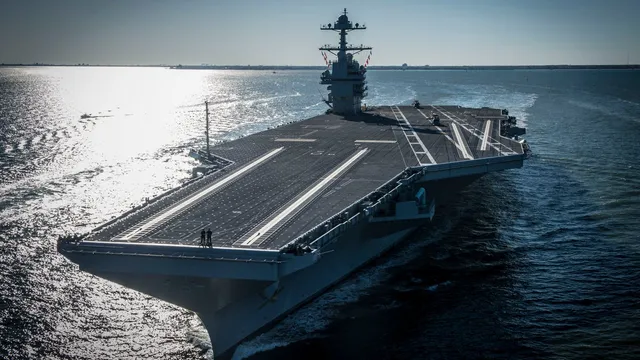
Two U.S. sailors injured in fire on USS Gerald Ford amid Iran operations
Two U.S. sailors injured in fire on USS Gerald Ford amid Iran operations
- A non-combat-related fire occurred on the USS Gerald Ford, injuring two sailors.
- The fire started in the main laundry area, with no damage to the ship's propulsion plant.
- The incident highlights the dangers faced by military personnel even during non-combat operations.
Story
Recently, a fire broke out on the USS Gerald Ford, the United States' newest and largest aircraft carrier, while it was stationed in the Red Sea as part of operations related to the ongoing conflict with Iran. Fortunately, the fire was non-combat-related and occurred specifically in the ship's main laundry area. Two sailors were injured and received medical treatment for non-life-threatening injuries, with their conditions reported to be stable. This incident is a concerning reminder of the hazards that military personnel face even outside of direct combat situations. The USS Gerald Ford, with a crew of over 5,000 and equipped with more than 75 military aircraft, has been a crucial asset in the United States efforts to maintain a presence in the Middle East amid the growing tensions with Iran. Despite the fire, the military has confirmed that the ship's propulsion plant sustained no damage, ensuring that the carrier remains fully operational. The USS Gerald Ford has been deployed for more than nine months, having earlier participated in missions in the Caribbean prior to its current operations in the Red Sea. This incident might provoke discussions about the safety and management of naval assets during high-stress deployments, particularly in conflict zones. The U.S. military noted that, additionally, the broader conflict with Iran has resulted in seven U.S. military members losing their lives and approximately 150 troops sustaining injuries. As the situation with Iran continues to predictably evolve, the need for operational readiness remains paramount. Observers are closely watching how incidents like these will affect military strategy and personnel deployments moving forward, especially with potential escalations in hostilities. The U.S. Navy's capabilities and incident preparedness will be scrutinized as the conflict persists, highlighting the balance of operational demands and the health and safety of military personnel.
Context
insight economic economic analysis analysis strategic strategic global shift strategic economic geopolitical policy shift economic global economic strategic policy shift data data shift data geopolitical market analysis impact data market analysis market impact strategic global impact policy data shift policy trends analysis analysis analysis policy impact policy geopolitical policy geopolitical policy data global policy economic trends data strategic trends impact market global trends economic impact insight shift insight policy impact data impact trends analysis shift economic insight trends economic shift...


