
business
controversial
innovative

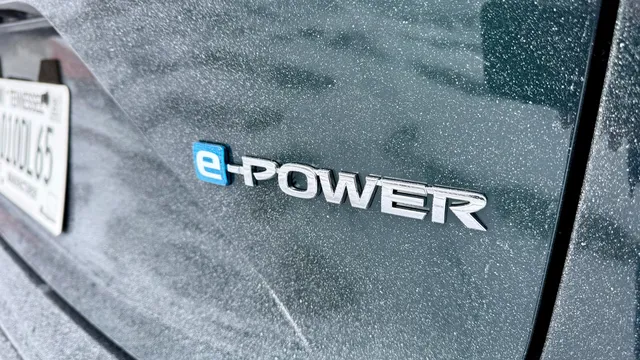
Nissan tests new E-Power hybrid system with imported Qashqais

Feb 24, 2026, 12:43 PM20
(Update: Feb 24, 2026, 5:43 PM)
Japanese company
political and economic union of 27 European states

Nissan tests new E-Power hybrid system with imported Qashqais

  • Nissan has developed a series hybrid system called E-Power designed to improve efficiency in driving conditions.
  • The recent testing involved imported European-spec Qashqais, set to feature the same powertrain in the upcoming Rogue.
  • If successful, the E-Power system could revitalize Nissan's hybrid offerings and appeal to North American buyers.
Share your opinion
2

Story

Nissan, a prominent automotive manufacturer, has been cautious in rolling out its E-Power hybrid system in North America despite its popularity in Europe, Japan, and other Asian markets. The company believes this series hybrid system is not well suited for the driving conditions typically observed in North America, which primarily involves highway driving where series hybrids are less effective compared to other types. In a bid to showcase this technology, Nissan imported new Qashqais from Europe, providing an opportunity for consumers to experience the E-Power system ahead of its debut in their upcoming Rogue model, set to launch in 2027. The E-Power systems utilize a compact modular powertrain that combines several components — including the electric motor, generator, inverter, and a battery — to enhance efficiency. The engine, a newly designed three-cylinder unit, boasts an impressive thermal efficiency of 42 percent. It functions uniquely by channeling power exclusively through an electric motor or to the battery for later use, without directly powering the front wheels. Despite its technological advancements, some feedback indicated that the vehicle's braking system could benefit from smoother blending between regenerative and friction braking. As they prepared for its market release, Nissan aimed for the Rogue E-Power to distinguish itself by providing better fuel efficiency than previous hybrid offerings, like the Rogue hybrid and Altima. Enthusiasts expressed hope that competitive pricing and strong performance metrics could attract buyers who have been excited about more robust hybrid alternatives in the dealership's lineup. However, there are also concerns, as noted by potential buyers and industry observers, about the hybrid's efficiency during highway driving compared to conventional hybrids due to energy loss during conversion. Some commentators suggest that introducing a Plug-in Hybrid Electric Vehicle (PHEV) version could capitalize on an unmet demand for longer electric driving ranges without range anxiety. Overall, Nissan's introduction of the E-Power hybrid technology reflects an evolving strategy to adapt to different market dynamics while enhancing consumer choices. As electric vehicle technology continues to grow, the company must navigate effectively between the demands of sustainability and the practical driving conditions of North America, balancing both innovations with traditional automotive expectations.

Context

The hybrid vehicle market in the United States has seen significant growth and transformation over the last decade, driven by technological advancements, changing consumer preferences, and regulatory policies aimed at reducing emissions. As of now, hybrids are recognized for their ability to offer better fuel efficiency and lower emissions compared to traditional gasoline vehicles. The increasing awareness of climate change coupled with rising fuel prices has prompted consumers to consider vehicles that provide better sustainability options without compromising on performance. Moreover, government incentives such as tax credits and rebates have further spurred the adoption of hybrids, making them more attractive to potential buyers. As automakers expand their hybrid offerings, including plug-in hybrids, the variety available in the market is more diverse than ever, catering to a wide range of consumer needs and preferences. The future of hybrid vehicles in the U.S. automotive market is intrinsically linked to technological advancement and innovation. Automakers are increasingly investing in research and development to enhance hybrid technologies, focusing on improving battery efficiency, reducing costs, and making hybrids more competitive against fully electric vehicles. The transition to hybrid technology is seen not only as a path to cleaner driving but also as a critical step in the larger movement toward electric mobility. In this context, hybrids serve as a bridge, allowing consumers to adapt gradually to electrification while still enjoying the convenience of traditional refueling systems. This adaptability is vital as the infrastructure for supporting electric vehicles continues to develop. In addition to technological innovations, the regulatory landscape will continue to shape the hybrid vehicle market. The U.S. government has set ambitious goals for reducing carbon emissions and transitioning to greener technologies. As stricter fuel economy standards and emissions regulations are implemented, automakers may further prioritize the development of hybrid models to comply with these mandates. Furthermore, consumer attitudes towards sustainability are also evolving. Younger generations are more environmentally conscious and may favor hybrid vehicles over conventional options. Therefore, it is crucial for manufacturers to align their strategies with these consumer values to capture market share effectively. Despite the advancements and positive trends, challenges remain for hybrids in gaining widespread acceptance. Competition from fully electric vehicles is on the rise, as many consumers are now leaning towards the idea of going fully electric, particularly with the enhanced range and improved charging infrastructure. There exists a risk that hybrids may be seen as a transitional technology that could overshadow the longer-term potential of fully electric vehicles. Nevertheless, given the current landscape, the hybrid vehicle segment remains a pivotal part of the automotive market in the U.S., providing a practical solution that meets immediate needs while facilitating a gradual move towards a more sustainable transportation future.

2026 All rights reserved
