

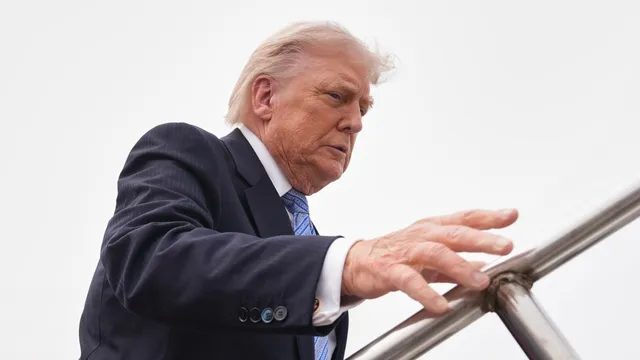
Trump defends Chinese purchases of US farmland despite farmer concerns
Trump defends Chinese purchases of US farmland despite farmer concerns
- President Donald Trump admitted that Chinese nationals have been involved in purchasing U.S. farmland for years.
- Trump argued that removing Chinese investment could lead to crashing land prices and further financial losses for farmers.
- His remarks sparked renewed concerns among American farmers and policymakers regarding national security and agricultural stability.
Story
During his state visit to China, President Donald Trump addressed the issue of Chinese nationals purchasing U.S. farmland, a topic that has garnered significant concern among American farmers and lawmakers. Despite expressing a lack of enthusiasm for these acquisitions, Trump emphasized that removing Chinese investors would contribute to a crash in farmland prices. He attributed the increasing ownership of U.S. land by Chinese nationals to prior administrations, particularly highlighting that the Obama administration did nothing to prevent this trend. Furthermore, Trump defended allowing thousands of Chinese students to study in the United States, suggesting that it would have a negative impact on lower-tier universities if they were barred from hosting foreign students. Trump's comments come at a crucial time when U.S. farmers are grappling with an array of challenges, including fluctuating commodity prices, significant fertilizer expenses, and uncertainties regarding trade policies with China. Chet Erdinger, a farmer from South Dakota, voiced concern that allowing Chinese buyers to acquire agricultural land could lead to deeper issues in the future. He expressed skepticism about the long-term reliability of Chinese landowners, emphasizing that the initial intentions of these buyers might change over time. The president's statements also contrast sharply with policies advocated by some in his administration, who have warned that foreign adversaries purchasing American farmland could threaten national security. Farmers and lawmakers across the U.S. have increasingly raised alarms about these foreign investments, particularly those near military installations. Brian Reisinger, a fourth-generation farmer, stressed that the implications of such purchases extend beyond agricultural markets to broader concerns about national food security. As Trump’s administration has engaged with China regarding trade policies, tensions have impacted several agricultural industries, including soybeans, which have faced decreased exports. Farmers are hoping for political solutions that can stabilize the market and ensure reliable demand amid ongoing trade disputes. Trump's statements could reshape the dialogue around foreign investment in U.S. agriculture, as he continues to ensure that his policies reflect the needs and sentiments of American farmers while addressing geopolitical concerns.
Context
The impact of foreign ownership on American agriculture has become an increasingly critical topic as global dynamics shift and investment patterns change. Foreign investments in U.S. agriculture have surged over the last decade, driven by a combination of economic opportunities and the quest for food security among foreign investors. This trend has raised questions about the potential benefits and drawbacks of foreign ownership in the agricultural sector, encompassing aspects such as economic growth, land use, and food sovereignty. Proponents argue that foreign investment brings much-needed capital into the American agricultural sector, facilitates technological advancements, and can lead to increased production efficiency. These investments may also enhance access to global markets, providing U.S. farmers with additional opportunities to export their products and diversify their income streams. Additionally, foreign entities often bring expertise and innovation that can bolster agricultural practices and sustainability initiatives within the United States, potentially leading to a more resilient food system overall. However, the increase in foreign ownership also raises several concerns related to national security, local economic impacts, and the distribution of benefits from agricultural gains. Critics argue that excessive foreign control over land and agricultural resources may undermine the interests of American farmers and rural communities. There are fears that such ownership could lead to prioritizing profits over local needs, resulting in higher food prices and reduced access for U.S. consumers. Furthermore, depending on the extent of foreign ownership, there can be implications for maintaining food sovereignty and self-sufficiency, a concept that is particularly important in times of global crises, such as pandemics or geopolitical tensions. Regulatory frameworks are essential in managing the implications of foreign ownership in agriculture. The Committee on Foreign Investment in the United States (CFIUS) plays a critical role in scrutinizing foreign investments to ensure they do not threaten national security. However, the current regulatory landscape may not adequately address all concerns, particularly those related to the concentration of land ownership and its impacts on rural communities. There is a growing call for a reevaluation of policies governing foreign investments in agriculture to strike a balance between attracting foreign capital and protecting domestic interests. This may involve implementing stricter disclosure requirements, limiting the amount of agricultural land that can be owned by foreign entities, and fostering greater transparency in foreign purchases and transactions in the agricultural sector. Ultimately, the discourse surrounding foreign ownership in American agriculture highlights a tension between globalization and local interests. As the U.S. agricultural sector continues to evolve, stakeholders must work collaboratively to ensure that foreign investments contribute positively to the economy while protecting the interests of local communities and consumers. Sustaining the American agricultural character amidst increasing globalization will require careful policy consideration, strategic planning, and public engagement to foster a robust and equitable agricultural economy.


