

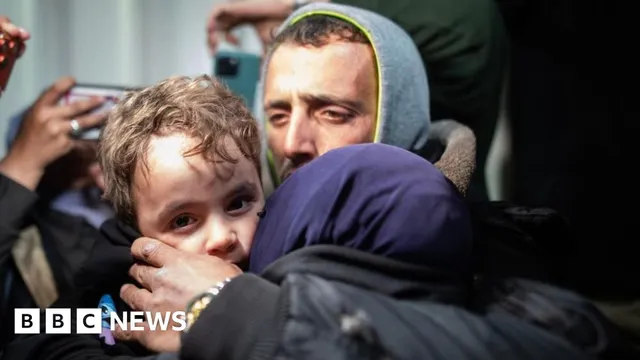
Limited crossings through Rafah border exposes Gaza's plight
Limited crossings through Rafah border exposes Gaza's plight
- Palestinians are waiting to cross the Rafah border crossing, which reopened after a long closure due to conflict.
- On the first day of reopening, only 16 patients were allowed to cross into Egypt, far less than expected.
- The reopening of Rafah provides a potential solution for the humanitarian crisis in Gaza, but operational challenges remain significant.
Story
In Gaza, the Rafah crossing with Egypt reopened on February 1, 2026, after being largely closed since Israeli forces took control in May 2024. The reopening was eagerly anticipated by many Gazans seeking medical treatment not available in their territory due to the ongoing humanitarian crisis. On its first day, however, the crossing experienced significant delays and confusion regarding patient eligibility, with only 16 patients with chronic conditions allowed to cross from Gaza to Egypt, falling short of the hoped-for numbers. Palestinian and Egyptian officials had initially stated that approximately 200 people would be able to cross in both directions, yet the numbers proved far lower. On the Gaza side, patients were transported by the Palestinian Red Crescent, but logistical issues and strict vetting from both Israel and Egypt complicated the crossing process. Inspections and disagreements led to frustration, as many waiting individuals expressed fear and uncertainty about their ability to cross the border. Since the start of the conflict, medical evacuations from Gaza had severely decreased, with only 17 patients leaving the territory on average per week. In total, over 10,000 patients had managed to evacuate since the war’s beginning, but thousands more remain in desperate need of medical attention. The number of those needing treatment exceeds 20,000 and is likely to grow further as the humanitarian situation deteriorates. Local hospitals report being overwhelmed with patients, and many families are left waiting in limbo. The reopening of Rafah represented a critical juncture for the long-suffering Gaza population. While it presented a glimmer of hope, the operational difficulties highlight the immense challenges those in Gaza continue to face. Aid organizations, including the World Health Organization, are working to address health concerns, but without consistent access for medical evacuations, many risk worsening health outcomes. The need for a more manageable process is essential, as the international community eyes the efforts to stabilize the situation in Gaza and provide the necessary aid to its inhabitants.
Context
The Rafah border crossing serves as a critical point of passage between Egypt and the Gaza Strip, playing a vital role in the humanitarian and economic exchanges of the region. Historically, the crossing has been both a gateway to the outside world for Gazans and a focal point of political tension, particularly in the context of the Israeli-Palestinian conflict. Its significance has evolved over time, reflecting broader geopolitical dynamics and local governance changes, particularly since the 2005 withdrawal of Israeli troops from Gaza and the subsequent control of the area by Hamas. The Rafah border crossing has been subject to numerous closures and restrictions, often depending on the security situation and bilateral relations between Egypt and Hamas, significantly impacting the flow of goods and people into and out of Gaza. Throughout its history, the Rafah border crossing has facilitated crucial humanitarian aid, medical supplies, and trade. However, its accessibility has fluctuated dramatically in response to political climates, especially during periods of escalated conflict. The Egyptian government has implemented various security measures, including restricted opening hours and thorough inspections, allegedly to prevent the smuggling of weapons and to manage regional stability. These measures have, at times, exacerbated the humanitarian crisis in Gaza by limiting essential supplies and increasing economic hardships for its residents. In recent years, the situation at Rafah has been characterized by temporary openings to allow for humanitarian aid, medical evacuations, and the movement of individuals, although comprehensive solutions remain elusive. International organizations and NGOs have frequently called for the lifting of restrictions to ensure consistent aid flow, arguing that the necessities of civilian life should not be subjected to political maneuvering. The crossing acts as a lifeline for many Gazans, demonstrating the intertwining of humanitarian needs with underlying political realities. The role of the Rafah crossing is also emblematic of larger geopolitical issues, where external political influences shape local realities. Regional tensions, the policies of different governing authorities in Gaza and Egypt, and the implications of international diplomacy continuously affect its operation. Efforts by various stakeholders to mediate the Rafah crossing's function reflect ongoing complexities in the Israeli-Palestinian conflict, drawing attention to the intertwined fates of the Israelis and the Palestinians. As of now, the future of the Rafah border remains uncertain, hinging on evolving political landscapes and the pressing humanitarian needs of those it serves.


