

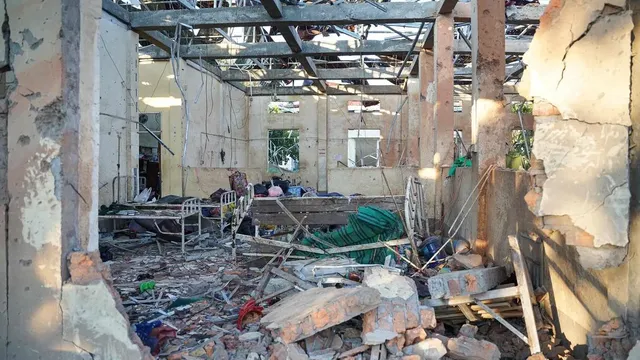
Global leaders ignore military junta's deadly airstrikes in Myanmar
Global leaders ignore military junta's deadly airstrikes in Myanmar
- General Yawd Serk, leader of the Restoration Council of Shan State, reported a rise in deadly airstrikes by Myanmar's military on civilians.
- He highlighted China's unique involvement while criticizing the international community's inaction regarding the humanitarian crisis.
- Serk called for political dialogue and trust-building among armed factions to address the ongoing conflict.
Story
Myanmar has been in turmoil since a military coup in 2021, during which the democratically elected government of Aung San Suu Kyi was ousted. This coup led to widespread conflict across the country, with the ruling military junta carrying out increased bombing campaigns targeting civilian areas. General Yawd Serk, leader of the Restoration Council of Shan State, reported that over 1,000 civilian locations had been struck in the past 15 months, resulting in at least 1,728 civilian deaths since late 2024. Despite these violent actions, international responses have been minimal, with only China being recognized for its intervention in the conflict, leading to heightened suffering among civilians. The military's surge in airstrikes represents not only a humanitarian crisis but also a strategic move to suppress pro-democracy forces that lack aerial defense capabilities. The junta frames its attacks as actions against terrorists, further complicating the situation as it justifies its violence under the guise of security. Amid this chaos, General Yawd Serk has called on the international community to pay attention to the plight of civilians trapped in this conflict, ensuring their suffering is not overlooked. Additionally, he has emphasized the need for trust-building among Myanmar's various armed factions, suggesting that political dialogue with the military remains essential to resolving the ongoing war. China's role as a power broker in the conflict adds another layer of complexity, as it has supported some ethnic armed groups while simultaneously urging them to stand down to maintain stability deemed necessary for its Belt and Road infrastructure interests. The situation has resulted in a fractured political landscape, which could lead to deeper conflicts and grievances among the different factions within the country. General Yawd Serk's criticisms of the procession and leadership of Senior General Min Aung Hlaing further illustrate the tensions between the ruling military junta and the various ethnic groups fighting against it. In a recent statement, Min Aung Hlaing called on ethnic and “terrorist” groups to abandon armed struggles and participate in peace talks. However, General Yawd Serk dismissed this appeal as an outdated message that was not accepted. He expressed a preference for a political solution, urging that the leadership of the military government should be judged based on its actions and not merely promises. The international community's lack of response has drawn ire from those fighting for democracy in Myanmar, leaving many civilians caught in the crossfire of this violent upheaval. These developments underscore the urgency for external intervention as civilians continue to face brutal airstrikes while advocating for their rights to live peacefully.


