

Roses for Valentine's Day surge amid higher costs and tariffs
Roses for Valentine's Day surge amid higher costs and tariffs
- Agricultural specialists at Miami International Airport process around 990 million stems of flowers ahead of Valentine's Day.
- Miami is responsible for 90% of the fresh cut flowers sold in the U.S., with significant imports from Colombia and Ecuador.
- Increased tariffs and Colombia's new minimum wage are leading to higher consumer prices for Valentine's Day flowers.
Story
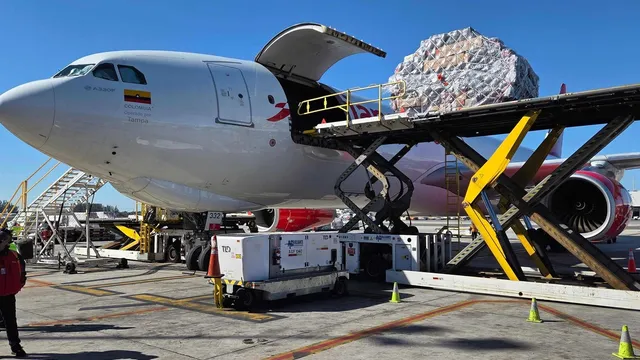
In the lead-up to Valentine's Day, which falls on February 14, 2026, Miami International Airport has become a crucial hub for the import of fresh cut flowers into the United States. Approximately 990 million stems of various flowers, including roses, carnations, and hydrangeas, are processed at this airport during the weeks preceding the holiday. This influx primarily comes from Colombia and Ecuador, which supply around 90% of the flowers sold in the US for Valentine's Day, while the remaining 10% is imported through Los Angeles. Major flower importer Avianca Cargo, based in Medellín, Colombia, plays a significant role in this operation, transporting around 19,000 tons of flowers on 320 flights, more than doubling their standard flight frequency. During this period, red roses particularly dominate, making up about 50-60% of the flowers shipped, as many customers opt for this classic choice to express their love. Despite the high demand, consumers can expect to face increased flower prices this year. Factors contributing to these price hikes include tariffs imposed last year on imports from Colombia and Ecuador, alongside a new minimum wage law that recently took effect in Colombia. Christine Boldt, executive vice president of the Association of Floral Importers of America, indicated that these developments add significantly to the overall costs of the bouquets arriving in the US. As a result, consumers throughout the country may notice higher prices as they purchase flowers for their loved ones. Miami International Airport continues to uphold its reputation as a leading cargo hub, with flowers being one of its largest imports. The airport managed nearly 3.5 million tons of cargo in the last year, including around 400,000 tons of flowers. Notably, over a quarter of these floral imports occur in the days leading up to Valentine's Day, which represents a 6% increase compared to the previous year. Ralph Cutié, the airport director, mentioned the pride Miami International Airport takes in contributing to celebrations across the country, suggesting that many bouquets received on Valentine's Day will have passed through their facilities. Agricultural specialists at the airport are tasked with ensuring the safety and quality of the imported flowers. They conduct rigorous inspections to identify any potentially harmful plant pests or diseases before the flowers enter the United States. According to Daniel Alonso, a senior official at Customs and Border Protection (CBP), inspectors report finding an average of 40-50 plant pests per day, predominantly moths. Any identified pests are referred to the U.S. Department of Agriculture for further assessment, which plays a crucial role in safeguarding America's floral and agricultural industries from outside threats. The importance of these measures cannot be understated, as they protect both the domestic market and consumers from the risks associated with foreign flora.
Context
The impact of tariffs on flower imports from Colombia and Ecuador is a significant topic for both the importing countries and the exporters. Colombia and Ecuador are two of the largest exporters of cut flowers, particularly roses, to the United States and other lucrative markets. The application of tariffs can directly influence the pricing, availability, and competitiveness of these floral imports. Tariffs increase the cost of imported goods, which can discourage importation, especially in a market that is sensitive to price changes. These countries benefit from their geographical advantages and favorable climatic conditions, which allow them to produce a variety of flowers year-round. However, when tariffs are imposed, the cost benefit can diminish as consumers may turn to domestic sources or cheaper alternatives if prices rise too sharply. In recent years, there has been ongoing political discourse regarding trade policies, with some advocating for protectionist measures while others argue for free trade. The implications of increased tariffs can lead to reduced market share for Colombian and Ecuadorian flowers, impacting not only the economies of these countries but also the livelihoods of thousands of workers involved in the flower industry. Moreover, consumers in the importing countries may face higher prices and restricted selection, which can harm the overall market dynamics. The need for competitive pricing is essential in the floral import sector, particularly during peak seasons like Valentine’s Day and Mother's Day. Furthermore, the international relations between the exporting and importing countries significantly shape the tariff landscape. Any changes in trade agreements can yield immediate effects on the flower market, leading to fluctuations in trade volumes. Exporters in Colombia and Ecuador might seek to establish long-term contracts to mitigate potential losses from tariffs. Having established suppliers and relationships can be a buffer against sudden tariff increases, but not all businesses can afford such strategies. In conclusion, tariffs on flower imports from Colombia and Ecuador represent a crucial variable in international trade that affects multiple stakeholders, including exporters, importers, consumers, and local economies. The exploration of strategic alternatives, such as promoting local floriculture and exploring new markets, could be beneficial for both exporting nations. It is essential for policymakers and industry stakeholders to assess the long-term effects of tariffs on flower imports and work collaboratively to foster trade relationships that support fair pricing while enhancing the competitive edge of the flower industry.


