

Cambodia demands immediate withdrawal of Thai troops from disputed border
Cambodia demands immediate withdrawal of Thai troops from disputed border
- On January 3, 2026, Cambodia demanded the withdrawal of Thai military forces from disputed territories.
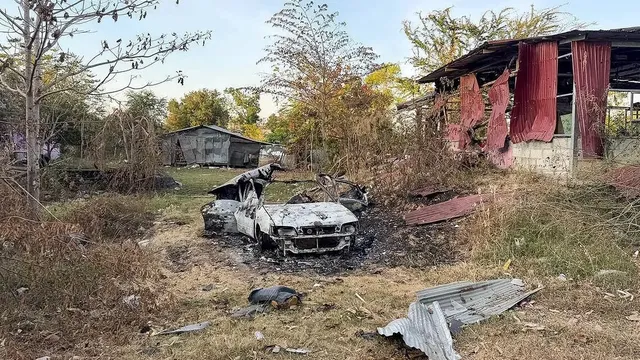
- Fighting erupted between Cambodia and Thailand in December 2025, causing significant casualties and displacement.
- Both nations need to find a diplomatic resolution to avoid further conflicts along their shared border.
Story
Cambodia experienced heightened tensions with Thailand over territorial disputes along their shared border. On January 3, 2026, Cambodia's foreign ministry issued a statement demanding the immediate withdrawal of all Thai military personnel and equipment from what Cambodia claims as its territory. This call to action came just a week after a truce was agreed upon on December 27, 2025, which had temporarily halted extensive military clashes that had lasted for three weeks, leading to numerous casualties and the displacement of around one million individuals from both nations. The recent conflict between Cambodia and Thailand escalated significantly in December 2025, during which the long-standing border issues flared up into violence, resulting in the deaths of dozens of people. The dispute primarily revolves around areas claimed by both countries and the colonially established demarcation of their 800-kilometer border. Historical tensions manifest in the current clashes over land and centuries-old temples, with both sides having strong claims to these territories. In addition to demanding troop withdrawal, the Cambodian government accused the Thai military of conducting what they termed an “illegal annexation” of the border village of Chouk Chey. This allegation drew strict condemnation from the Thai government, which maintained that its military was operating within Thai territory and denied any breach of sovereignty. Thai Prime Minister Anutin Charnvirakul publicly addressed the situation on January 2, 2026, emphasizing that Thailand has abided by international regulations and has not encroached upon its neighbor’s territory. As the situation remains volatile, both nations face a critical juncture where diplomatic resolution is essential to avoid further escalation of hostilities. The foreign ministry of Cambodia insists on a peaceful resolution based on mutual respect for territorial integrity, underlining the importance of dialogue to soothe the ongoing tensions. However, the Thai government’s refusal to acknowledge any wrongdoing complicates the prospects for a conciliatory approach, leaving both countries at risk of additional conflict unless a mutually acceptable agreement is reached.
Context
The history of Cambodia-Thailand border disputes is a complex and multifaceted issue that has evolved over centuries. The origins of the conflicts can be traced back to the colonial era, when the borders between the two nations were not clearly defined. The French colonial administration in Cambodia and the British influence in Thailand contributed to a lack of clarity regarding territorial claims. Tensions escalated as both nations sought to assert their sovereignty and control over resources, leading to a series of misunderstandings and conflicts that laid the groundwork for future disputes. In the post-colonial period, the border disputes intensified, particularly around areas that held significant cultural and historical importance. The most notable point of contention has been Preah Vihear Temple, a UNESCO World Heritage site located on a hilltop near the border. The temple, which dates back to the Khmer Empire, has been a symbol of national pride for both Cambodian and Thai people. In 1962, the International Court of Justice ruled that Preah Vihear Temple belonged to Cambodia, a decision that Thailand contested, resulting in military confrontations between the two countries in subsequent years. The issue of territorial sovereignty and national identity continues to fuel tensions, with both nations seeking to maintain their respective claims. The situation further complicated in the 2000s with the increasing nationalism in both countries and the resurgence of long-standing grievances. Periodic skirmishes border engagements occurred, leading to military buildups and heightened rhetoric. The involvement of local farmers and communities, who have found themselves in disputed areas, has added another layer to the conflict. As concerns over water resources and agricultural land intensified, it became clear that the disputes were not solely about historical claims but also about contemporary issues impacting the lives of people on both sides of the border. Efforts to resolve the border disputes have included diplomatic negotiations and joint commissions aimed at establishing a mutual understanding. Regional organizations, such as ASEAN, have been involved in mediating discussions to promote peace and stability in the region. However, progress has often been slow due to nationalistic sentiments and political dynamics in both countries. The Cambodia-Thailand border disputes serve as a reminder of the complexities of territorial conflicts, and without sustained dialogue and cooperation, the potential for future escalations remains a critical concern for both nations.


