

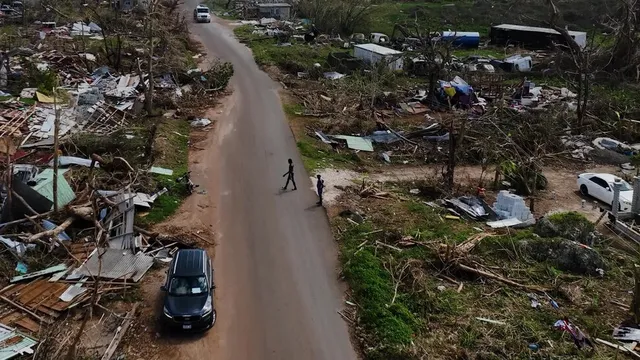
Hurricane Melissa devastates Jamaica, leaving families homeless
Hurricane Melissa devastates Jamaica, leaving families homeless
- Hurricane Melissa struck Jamaica as a Category 5 storm, causing catastrophic damage and fatalities.
- Around one million people have been affected, and many families are left homeless and without basic necessities.
- The recovery efforts will take time and require substantial support for housing and infrastructure rebuilding.
Story
Hurricane Melissa made landfall on October 28, 2023, in western Jamaica, wreaking havoc across the region. The storm was classified as a Category 5 hurricane and resulted in extensive destruction, with reports indicating at least 45 fatalities. Approximately one million individuals were affected, leading to a major humanitarian crisis as the island nation struggled to recover from the impacts of the devastating storm. Officials and relief organizations quickly mobilized to provide assistance, focusing primarily on delivering food and clean water to those in need. In the aftermath of the hurricane, various aid groups, church organizations, and the U.S. and Jamaican militaries began flying relief supplies to remote communities cut off by the flooding and destruction. The most immediate needs were identified as food and safe drinking water. As time progressed, the need for safe housing became more acute, as many families faced the challenge of living in the wreckage of their homes without adequate shelter from the ongoing rainy season. The Jamaican government faced immense difficulties in responding to the scale of this disaster, which has left thousands homeless. Many individuals were reported to be living in makeshift shelters, such as tarps or in severely damaged structures. Only a small percentage of the affected properties had insurance, exacerbating future recovery efforts. As such, community members were urged to come together to rebuild, despite the overwhelming loss and continued hardships, Reports from families, such as Lucius Leyvan’s family in Spanish Town, reveal a dire situation where basic necessities like water and electricity remain inaccessible. The local economy has taken a massive hit as businesses struggle to operate amidst the rubble. The community faces a long recovery ahead, where restoring their way of life will not happen easily and requires substantial support for rebuilding homes and infrastructure.
Context
policy shift global global data policy geopolitical economic policy impact geopolitical policy trends market analysis impact economic insight data economic economic economic insight strategic shift policy market insight analysis analysis insight economic data strategic strategic data impact strategic geopolitical insight market geopolitical strategic market economic policy impact shift impact insight insight geopolitical analysis strategic insight analysis impact economic analysis economic strategic analysis shift economic market strategic insight global policy global trends strategic economic insight policy strategic policy market shift economic...


