

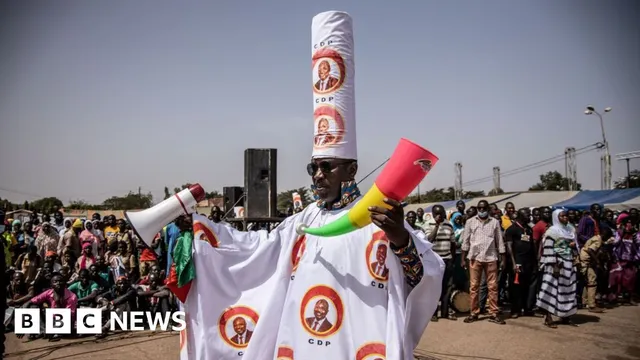
Burkina Faso's junta dissolves all political parties amid control efforts
Burkina Faso's junta dissolves all political parties amid control efforts
- Burkina Faso's military-led government has dissolved all political parties and scrapped existing laws governing them.
- The decision aims to address dysfunction and division within the country's political system, which had over 100 parties before the coup.
- This move reflects ongoing efforts by the junta to consolidate control and reshape the political landscape in the nation.
Story
In Burkina Faso, the military-led government has taken significant steps to consolidate its power by dissolving all political parties as of January 29, 2026. This decree was ratified by the council of ministers and indicates a decisive shift in the country’s political landscape following the coup that occurred in September 2022. The Interior Minister, Emile Zerbo, stated that the dissolution was a necessary measure to address years of dysfunction within the multiparty system, which they claim fostered division and weakened the social cohesion of the nation. Prior to the coup, Burkina Faso was host to over 100 registered political parties, with 15 holding seats in parliament after the 2020 elections. The junta's dissolution of these entities follows a prolonged suspension of political activities under military rule. The minister highlighted that the proliferation of political groups had resulted in various issues, including societal fragmentation and weakened governance. With this new decree, all assets of the disbanded parties will be transferred to the state, marking a complete overhaul of political organization in the country. Furthermore, the military government plans to draft new laws that will guide the future establishment of political parties in Burkina Faso, signaling an intention to create a more regulated political environment. The rationale for this approach stems from a broader objective of reconstructing the state after acknowledging the numerous challenges faced under the previous political structure. However, critics may view these actions as part of a wider trend towards authoritarianism in West Africa. Burkina Faso, much like its neighboring countries Mali and Niger, has been grappling with security challenges posed by Islamist insurgences. Over the last decade, these conflicts have led to thousands of deaths and the displacement of millions of people. The junta's focus on tightening control measures and implementing major reforms, including the dissolution of the electoral commission, raises concerns about the future of democratic governance in the region. As this situation unfolds, the military authorities face the dual challenge of addressing pressing security issues while managing the legitimacy of their rule amid rising regional instability.


