

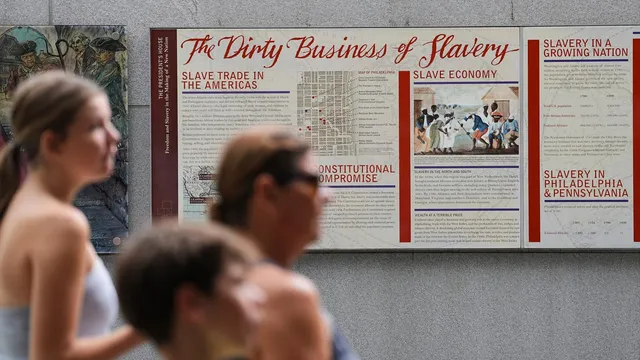
Trump administration removes slavery memorial exhibit in Philadelphia
Trump administration removes slavery memorial exhibit in Philadelphia
- The National Park Service removed exhibits honoring people enslaved by George Washington in Philadelphia as part of compliance with Trump's executive order.
- The removal sparked a lawsuit from the city of Philadelphia, citing attempts to distort historical truths.
- These actions signal a contentious debate regarding the portrayal of America's history regarding slavery and race.
Story
In January 2026, the National Park Service acted on a directive from President Donald Trump to remove slavery-related exhibits from the President's House in Philadelphia, part of Independence National Historical Park. These displays had honored nine individuals enslaved by President George Washington. The removal was initiated after Trump issued an executive order in March 2025 to revise historical materials that he deemed as promoting a 'corrosive ideology.' The city's government subsequently filed a lawsuit against the U.S. Interior Department, claiming that the removal efforts constituted an attempt to whitewash history and did not comply with legal requirements for public information display. Following the executive order, many historical sites across the nation faced scrutiny regarding how their exhibits portrayed America's historical narratives, particularly around the themes of slavery and race. The directive demanded a focus on the 'greatness of the achievements and progress of the American people,' leading to significant changes in how history is interpreted and presented in federal parks. Activists and local officials, including Philadelphia’s city council members, have vehemently criticized these actions as necessary historical truths are being erased in favor of a more sanitized version of American history. The lawsuit filed by Philadelphia underscores rising tensions over historical representation in public spaces, as the city argues that the removal disregarded community input and historical accuracy. Advocates for preserving the narratives of enslaved individuals argue that altering or dismantling these exhibits disregards the broader implications of America’s complex legacy. Amid the backdrop of the U.S.'s upcoming 250th anniversary of independence, such actions prompt fierce debates over what constitutes an accurate retelling of American history and who decides which aspects of history are worthy of commemoration. Moreover, removal of these exhibits not only impacts public understanding of historical truths but also has implications for educational outreach. The Black Journey, a local organization focused on Philadelphia's Black history, asserts that the actions taken by the Trump administration cannot erase the past, suggesting that the truth will continue to resonate despite attempts to suppress it. Overall, these developments reveal the ongoing struggle over the narrative of American history and its portrayals in public memory.
Context
The removal of slavery memorials in the United States has sparked a range of reactions from various stakeholders, reflecting deep-seated concerns about historical memory, racial justice, and the role of public monuments in contemporary society. These memorials, often viewed as symbols of racism and oppression, have been at the center of heated debates on how society remembers its past. The removal process gained momentum particularly following the nationwide protests in 2020, which were catalyzed by incidents of racial violence and a broader call for systemic change. Many advocates for the removal argue that these monuments glorify figures who perpetuated slavery and systemic racism, thus causing ongoing harm to marginalized communities. For them, dismantling these monuments is an imperative step towards acknowledging the truth of history and fostering a more equitable society. Conversely, opponents of the removal often claim that these memorials represent a crucial aspect of American history that should be preserved, reflecting a complex narrative that includes both positive and negative legacies. Some proponents of keeping these monuments fear that removal will lead to historical erasure, depriving future generations of important lessons from the past. They argue that rather than erasing these symbols, society should seek to provide context, encouraging education about their significance and the histories they reflect. This perspective often points to the need for a balanced historical dialogue, where the nuances of history can be explored openly without glorifying the detrimental aspects of it. In recent years, various cities and institutions have responded to these debates by either taking down specific memorials or creating additional narratives that address the complexities of history. For example, several local governments have initiated the process of replacing or updating memorials with plaques or sculptures that honor the voices of those who were oppressed, rather than those who oppressed them. Educational programs have also been developed to accompany these changes, aiming to provide the public with a broader understanding of the historical context surrounding these monuments and the ongoing impact of slavery on contemporary society. This shift indicates a broader trend towards reassessing the historical narratives that public monuments communicate and reimagining how communities can collectively address their pasts. As the dialogue around slavery memorials continues to evolve, it reflects deeper societal shifts regarding race, identity, and public memory. The reactions to their removal underscore the complexity of engaging with history in a way that is inclusive and reflective of the diverse narratives that exist within American society. Going forward, the discussions will likely focus not just on whether specific monuments should remain, but also on how communities can engage in more meaningful reflections on their histories. This will require a commitment to openness, a willingness to confront uncomfortable truths, and an emphasis on educational initiatives that promote understanding and reconciliation.


