

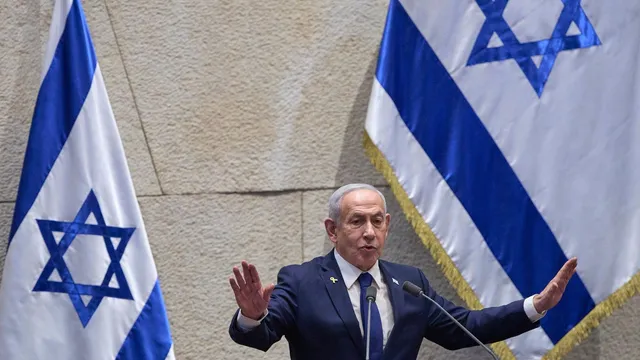
Netanyahu seeks pardon from president amid corruption trial
Netanyahu seeks pardon from president amid corruption trial
- Benjamin Netanyahu has submitted a request for a pardon to President Isaac Herzog amidst an ongoing corruption trial.
- He claims the trial is a distraction hindering his ability to govern, emphasizing the effects on national interest.
- The request has garnered support from figures like Donald Trump, raising critical questions about legal precedents in Israel.
Story
Benjamin Netanyahu, the Prime Minister of Israel, is caught in a prolonged corruption trial that began in 2020. He has faced serious allegations, including bribery and fraud, for which he has pleaded not guilty. As the only sitting prime minister in Israeli history to stand trial, Netanyahu has recently submitted a formal request to the country's president, Isaac Herzog, seeking a pardon. His move comes after weeks of discussions and public sentiment around his trial's impact on national governance. Netanyahu argues that the demands of attending court three times a week hinder his effectiveness in leading the country. He claims this trial, which requires him to focus considerable time and energy on legal proceedings, is detrimental not just to him personally but also to the national interest. His recent appeal includes two official documents – one drafted by his lawyer, Amit Hadad, and another signed by Netanyahu himself. Adding complexity to this unprecedented situation, prominent figures like former US President Donald Trump have publicly supported Netanyahu, urging Herzog to grant the prime minister a full pardon. Trump believes that Netanyahu's leadership is vital for Israel, suggesting that distracting legal issues should not impede the prime minister's governance. The US president's letter to Herzog emphasizes Netanyahu's historical contributions in defending Israel against external challenges and argues that the prime minister’s ability to govern should not be unduly compromised. However, the request for a pardon also raises questions about legal and democratic integrity. Critics assert that granting a pardon to someone who hasn't been convicted set a concerning precedent and undermines the rule of law. The president's office calls Netanyahu's request "extraordinary," and it emphasizes that Herzog will assess the implications of such a decision carefully, consulting relevant authorities in the justice department during this evaluation process. Moreover, Herzog’s position is complicated by his political neutrality as president and previous public advisories against getting entangled in party politics. As general elections approach, the timing of Herzog’s decision is also scrutinized.


