
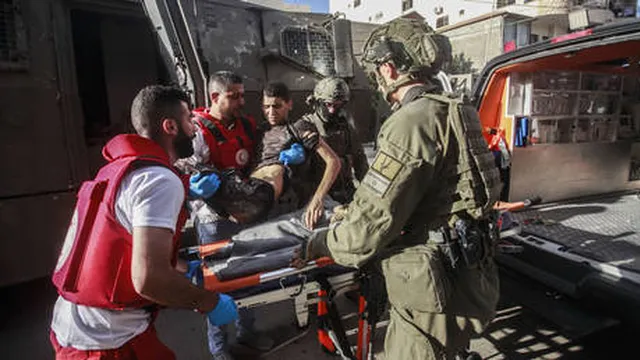
Israeli troops fire over 900 shots at aid workers in Rafah, killing 15
- An independent investigation found that on March 18, 2025, Israeli soldiers fired over 900 rounds at emergency vehicles in Rafah.
- The attack resulted in the death of 15 Palestinian aid workers, some shot execution-style.
- International organizations condemned the killings, highlighting the threat to humanitarian efforts in the ongoing conflict.
Story
In March 2025, an independent investigation revealed a tragic event in Gaza, where Israeli soldiers fired over 900 rounds at a convoy of marked emergency vehicles in Rafah. The attack occurred on March 18, targeting medics from the Palestine Red Crescent Society and the Civil Defense, who were responding to collect wounded civilians in the Tal as-Sultan area. Despite the vehicles displaying identification and operating under emergency conditions with lights activated, the aid workers faced intense gunfire. Fifteen Palestinian aid workers were killed, with several being shot execution-style from close range. The investigative report, conducted by Forensic Architecture and Earshot, meticulously reconstructed the incident utilizing various forms of evidence, including audio recordings, satellite imagery, witness testimonies, and video footage recovered from the phone of one of the slain paramedics. The evidence indicated a high level of military presence, with at least five shooters identified and possibly as many as thirty soldiers in the vicinity at the time. This suggests a coordinated attack on the aid workers, who were clearly performing their humanitarian duties. Following the gunfire, the Israeli forces not only flattened the vehicles but also attempted to bury them along with the bodies of the victims. Survivors reported disturbing accounts of being treated as 'human tools' at military checkpoints and faced unjust detainment. The International community, including the UN and various human rights organizations, condemned the killings, highlighting the blatant disregard for the safety of medical personnel amid the ongoing conflict. In the aftermath, an internal Israeli inquiry acknowledged 'professional failures,' however, it rejected claims of deliberate killing, thereby not holding any troops responsible for the assaults. The implications of such actions underscore a significant and troubling pattern of violence against humanitarian workers in conflict zones, prompting severe critique and calls for accountability. The broader context of violence has seen many medical and emergency personnel attacked since the IDF operations began in October 2023, further stressing the precarious situation for humanitarian efforts in the region.
Context
The Israeli-Palestinian conflict has deep-rooted historical, political, and social dimensions that significantly impact aid workers operating in the region. Aid workers are often caught in the crossfire of the ongoing violence, which poses severe personal risks and complicates their capacity to deliver humanitarian assistance. Despite the urgent need for aid due to the humanitarian crises in Palestinian territories and the impact of Israeli policies, the fluctuating security situation poses challenges to the safety and mobility of aid workers. Limited access to certain areas, restrictive movement regulations, and the constant threat of escalation in violence undermine the effectiveness and efficiency of aid operations. As such, the work of humanitarian agencies is consistently jeopardized, requiring a proactive approach to risk management and security planning, alongside real-time situational awareness. Moreover, the psychological toll on aid workers is significant, as they often witness firsthand the devastating effects of the conflict on civilian populations. Exposure to trauma, violence, and grief can lead to high levels of stress and burnout among aid workers, affecting their mental health and job performance. Humanitarian organizations must, therefore, prioritize psychological support and create conducive working environments that not only ensure safety but also promote well-being. This complexity is further compounded by political and funding challenges, as the prolonged nature of the conflict can affect donor priorities and support for humanitarian work in the region. Additionally, the political landscape in Israel and Palestine influences access to aid and the overall functioning of humanitarian interventions. Local regulations, relationships with governmental and non-governmental actors, and continuity of operations hinge on the evolving political situation. Aid workers must navigate the intricacies of relationships with diverse stakeholders, including local communities, militant groups, and state actors, which can further complicate their ability to fulfill their mandates. The need for negotiation skills and cultural competency becomes critical in ensuring that aid reaches those in need, while also maintaining respect for local dynamics and norms. In conclusion, the impact of the Israeli-Palestinian conflict on aid workers is multifaceted, presenting both profound challenges and critical considerations for humanitarian action. The safety and well-being of aid workers must be prioritized alongside their operational effectiveness, which requires a comprehensive understanding of the local context and ongoing developments within the conflict. As long as the humanitarian needs remain extensive amid the enduring conflict, the roles of aid workers will continue to be vital, albeit fraught with considerable risk and complexity.
