

Cambodia battles Thailand, escalating border violence claims civilians
Cambodia battles Thailand, escalating border violence claims civilians
- Recent fighting has erupted between Cambodian and Thai forces after a Thai soldier was killed during a new round of hostilities.
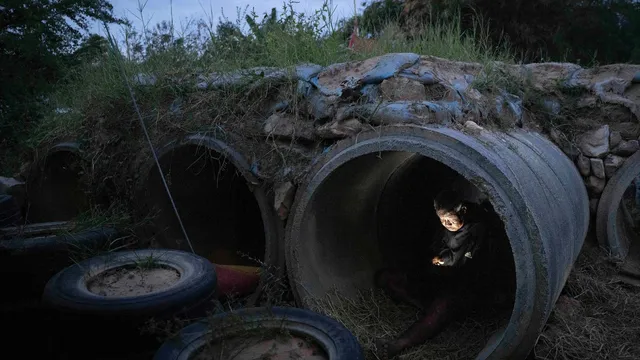
- Cambodia's military reported civilian casualties resulting from the ongoing conflict, highlighting the humanitarian impact of the violence.
- Both nations vow to continue their military operations, reflecting a serious escalation in tensions along their border.
Story
Cambodia has been engaged in escalating hostilities with Thailand along their shared border, particularly after a skirmish led to the death of a Thai soldier. This recent conflict follows an earlier ceasefire that lasted for five days in July, during which significant violence resulted in numerous civilian and military casualties and forced the evacuation of over 100,000 people. Amid these developments, Cambodian forces reportedly retaliated after refraining from fire for a time, claiming that they would focus on counterattacks against advancing Thai forces. President Hun Sen of Cambodia, who has been a dominant figure in the country's politics for decades, remains central to the nation’s military strategy, expressing both a desire for peace and a commitment to defend Cambodian territory. The military action reportedly included artillery strikes against suspected Thai positions. The Thai authorities, meanwhile, asserted that they would continue military operations to ensure national safety and would not tolerate what they perceive as encroachments on their sovereignty. Casualty reports have escalated, with claims from Cambodia indicating the killing of seven civilians and wounding of an additional 20. Furthermore, reports highlight that around 125,000 people have sought refuge in temporary shelters due to the instability resulting from military actions on both sides. The continuing strife has heightened concerns, as evident in statements from both Cambodian and Thai officials regarding the attacks and retaliations, which neither side appears willing to resolve diplomatically at present. The conflict is exacerbated by long-standing grievances, including Thailand's continuing detention of Cambodian prisoners taken earlier and allegations concerning landmines that are believed to originate from Cambodia's civil war. The Thai government holds Cambodia accountable for these unexploded munitions, complicating efforts to maintain peace. Given the renewed violence, calls from the United Nations Secretary-General, Antonio Guterres, for both nations to return to ceasefire agreements have intensified, reflecting the international community's concern about the escalating situation and the potential for further civilian suffering if fighting persists.
Context
The history of Cambodia-Thailand relations is marked by a complex interplay of cultural, historical, and geopolitical factors that have shaped interactions between these two Southeast Asian nations. Geographically, Cambodia and Thailand share a long border, which has historically been a site of conflict as well as cultural exchange. The ancient Khmer Empire, which flourished from the 9th to the 15th centuries, exerted significant influence over the region, including parts of what is now Thailand. Prestigious sites such as Angkor Wat, built during the reign of King Suryavarman II in the 12th century, symbolize this shared history. However, the decline of the Khmer Empire and the rise of neighboring powers set the stage for rivalry, with different kingdoms vying for dominance over territory and trade routes. Throughout the centuries, territorial disputes have often caused tension between Cambodia and Thailand. The 19th and early 20th centuries witnessed a series of confrontations rooted in colonial-era negotiations and the sometimes arbitrary borders drawn by European powers. Notably, the dispute over the Preah Vihear Temple, which began in the 20th century and culminated in a 1962 ruling by the International Court of Justice, remains a contentious issue that highlights the fragile nature of their bilateral relations. Nationalism and historical grievances have often fueled antagonism, leading to both military confrontations and diplomatic efforts to resolve conflicts. In recent decades, the relationship has evolved into a combination of cooperation and rivalry. The establishment of the Association of Southeast Asian Nations (ASEAN) in 1967 provided a platform for Cambodia and Thailand to engage in diplomatic dialogue, promoting regional stability and economic cooperation. However, nationalistic sentiments persist, especially surrounding historical sites and border demarcations, leading to periodic flare-ups. The two nations have engaged in various initiatives to improve economic ties, enhance tourism, and address common challenges such as illegal immigration and cross-border trade issues while grappling with their complicated historical legacies. Despite the challenges, there are also positive developments in Cambodia-Thailand relations. Cultural exchanges, joint tourism initiatives, and collaborative economic projects symbolize a growing recognition of shared interests. Both countries have invested in dialogue mechanisms to ease tensions and foster mutual understanding. As globalization continues to reshape regional dynamics, Cambodia and Thailand face the crucial task of balancing their historical grievances with the necessity for cooperation. The future of their relations will largely depend on their ability to forge a peaceful coexistence through diplomacy, mutual respect, and shared aspirations for economic development.


