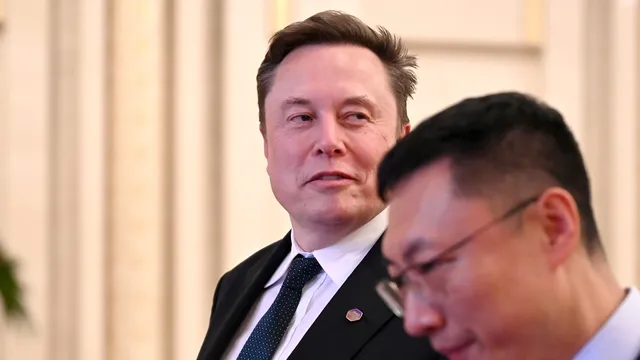
Elon Musk becomes first trillionaire after SpaceX's record IPO
business
impactful

Elon Musk becomes first trillionaire after SpaceX's record IPO

11
(Update: )
business magnate and investor
American private aerospace company
  • Elon Musk became the first trillionaire in history following SpaceX's record-breaking IPO.
  • SpaceX is recognized for its advancements in reusable spaceflight and satellite communications.
  • The ESG rating assigned to SpaceX by MSCI has raised significant concerns about the credibility of such ratings.
Share opinion
1

Story

In the United States, Elon Musk achieved a historic milestone by becoming the first trillionaire in history following the record-breaking initial public offering (IPO) of SpaceX, the rocket company he founded. This event marked a significant moment not only for Musk but also for the space industry, as SpaceX has been at the forefront of innovation in reusable spaceflight technology. The IPO was met with considerable excitement, reflecting the growing interest in space exploration and commercial space ventures. However, market volatility has since caused fluctuations in Musk's net worth, occasionally dropping it below the trillion-dollar mark during trading sessions. SpaceX's advancements in reusable launch vehicles and its expanding role in satellite communications and artificial intelligence technologies have positioned the company as a leader in the aerospace sector. Musk's reputation as an environmentalist has also contributed to the positive perception of SpaceX, as the company aims to make humanity multi-planetary while promoting sustainable practices in space exploration. Despite these achievements, the recent ESG (Environmental, Social, and Governance) rating assigned to SpaceX by MSCI has sparked controversy, raising questions about the credibility of such ratings in the investment community. Critics argue that MSCI's ESG ratings are increasingly disreputable and fail to accurately reflect the true impact of companies like SpaceX. The rating system has been criticized for prioritizing ideological agendas over financial performance, leading to concerns about fiduciary responsibility among investors. Many believe that ESG strategies often deliver inferior returns compared to non-ESG funds, which can burden savers with unnecessary costs. This has led to a growing skepticism regarding the reliability of ESG ratings, particularly when they equate innovative companies with entities that engage in harmful practices. The absurdity of ranking SpaceX alongside hostile foreign adversaries, such as Russia, highlights the flaws in the ESG framework. Investors are expected to consider societal concerns on par with serious geopolitical issues, which many view as a misallocation of capital. As evidence mounts that ESG-guided investments frequently underperform, the confidence in these ratings is increasingly questioned. The situation underscores the need for a reevaluation of how investments are guided and the importance of focusing on financial prudence and American interests in the evolving landscape of sustainable investing.

Context

The impact of Environmental, Social, and Governance (ESG) ratings on investments has become a focal point for investors, companies, and policymakers alike. As the global economy increasingly prioritizes sustainability and ethical practices, ESG ratings serve as a critical tool for assessing the long-term viability and ethical standing of companies. These ratings evaluate a company's performance in areas such as environmental stewardship, social responsibility, and governance practices, providing investors with insights into potential risks and opportunities associated with their investments. The growing emphasis on ESG factors reflects a broader shift in investment strategies, where traditional financial metrics are complemented by non-financial indicators that can influence a company's reputation and operational success. Investors are increasingly recognizing that companies with strong ESG ratings tend to exhibit lower volatility and better financial performance over time. Research has shown that firms with high ESG scores often enjoy enhanced brand loyalty, reduced regulatory risks, and improved operational efficiencies. Consequently, these companies are more likely to attract investment from institutional investors who are integrating ESG considerations into their decision-making processes. The rise of sustainable investing has led to the creation of various ESG-focused funds and indices, which further incentivizes companies to improve their ESG performance to remain competitive in the market. Moreover, the regulatory landscape surrounding ESG disclosures is evolving, with governments and regulatory bodies pushing for greater transparency and accountability. This shift is prompting companies to adopt more rigorous ESG reporting practices, which not only helps investors make informed decisions but also encourages companies to enhance their sustainability initiatives. As a result, the integration of ESG factors into investment analysis is becoming a standard practice, influencing capital allocation and driving companies to prioritize sustainable practices in their operations. In conclusion, the impact of ESG ratings on investments is profound and multifaceted. As investors increasingly seek to align their portfolios with their values, the demand for transparent and reliable ESG information will continue to grow. Companies that proactively address ESG issues are likely to benefit from increased investor interest, improved financial performance, and a stronger competitive position in the marketplace. The ongoing evolution of ESG investing signifies a transformative shift in how capital is allocated, emphasizing the importance of sustainability and ethical governance in shaping the future of investment strategies.