

Four guards sentenced for brutal beating death of Robert Brooks
Four guards sentenced for brutal beating death of Robert Brooks
- Four prison guards were sentenced for participating in the fatal beating of Robert Brooks in December 2022.
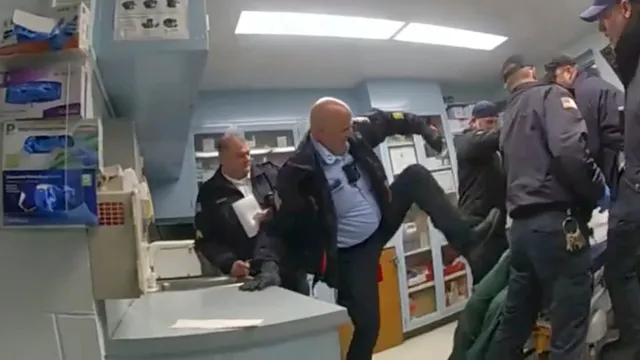
- The brutal incident, captured on camera, led to public outrage and renewed calls for reform in how inmates are treated.
- The case emphasizes the importance of accountability in the justice system and treatment of incarcerated individuals.
Story
In a significant development in New York's criminal justice system, four prison guards received prison sentences for the role they played in the brutal beating death of Robert Brooks, an incarcerated Black man. The incident took place at Marcy Correctional Facility on December 9, 2022, and was captured on body-cam footage, showcasing the excessive force used against the restrained 43-year-old. Brooks had been serving a 12-year sentence for first-degree assault since 2017 when he was transferred to Marcy from a nearby facility the night of the assault. The four guards involved—Nicholas Anzalone and Anthony Farina—initially faced murder charges but ultimately pleaded guilty to first-degree manslaughter, receiving lengthy sentences of 22 years each. Meanwhile, two other guards, Michael Mashaw and David Walters, who pleaded guilty to second-degree manslaughter, were sentenced to three to nine years, and two years, four months to seven years, respectively. The sentencing took place on a Friday, following their guilty pleas in September, just weeks before a scheduled trial for other implicated guards. Brooks' death ignited public outrage, highlighting systemic issues within correctional facilities regarding the treatment of incarcerated individuals. Statements from Brooks' family during the hearing provided a heartbreaking glimpse into the emotional toll of the incident. His brother, Jared Ricks, expressed hopes that the guards would experience a more humane treatment in prison than they had shown his brother. Robert Brooks Jr., the victim's son, shared a powerful reflection, stating that viewing the footage of his father's fatal beating felt akin to watching a horror movie, shedding light on the brutality involved. The case is part of a larger scrutiny of how incarcerated individuals are treated, especially within the system that is meant to rehabilitate rather than punish cruelly. Onondaga County District Attorney William Fitzpatrick also noted the procedural complications during the hearings, which hampered certain family members' ability to read their statements directly. The prosecution's efforts have been part of a broader push for reform in the context of rising awareness about police and guard brutality towards those in custody. Relatedly, the legal system continues to address other cases involving guards at Marcy Correctional Facility, with trials ongoing for additional individuals related to other incidents of violence against inmates.
Context
The systemic issues in the US prison system are multifaceted and deeply rooted in historical, social, and economic contexts. Overpopulation within prisons is a significant concern, driven by tough-on-crime policies that have resulted in a surge in incarceration rates over the last several decades. The War on Drugs has particularly exacerbated this problem, as non-violent drug offenders often receive harsh sentences that contribute to overcrowding. As a result, many facilities operate beyond their intended capacity, which fosters an environment of violence and neglect, undermining the rehabilitative goals of incarceration. Additionally, the quality of healthcare within prisons is alarmingly inadequate. Many inmates suffer from mental health issues and chronic illnesses, yet the resources allocated to their care are often insufficient. This disparity in healthcare not only exacerbates existing conditions but also leads to a cycle of health decline that can extend beyond their incarceration. Poor healthcare access is compounded by a lack of trained professionals who can address the unique needs of the incarcerated population, ultimately resulting in substandard living conditions and a violation of human rights. Racial and socioeconomic disparities are also evident in the prison system, where marginalized communities are disproportionately affected by incarceration rates. Studies show that black and Hispanic individuals are incarcerated at significantly higher rates than their white counterparts, often due to systemic biases in law enforcement practices and sentencing. This disparity reflects broader societal inequalities and raises questions about the fairness of the justice system. Furthermore, economic factors play a crucial role, as individuals from low-income backgrounds face barriers to legal representation, often resulting in harsher sentences and less favorable outcomes in court. Lastly, the lack of effective rehabilitation programs in prisons leaves many inmates ill-prepared for reintegration into society upon release. With limited access to education and vocational training, inmates often find themselves returning to the same circumstances that led to their prior incarceration. This failure to rehabilitate perpetuates a cycle of recidivism, placing an additional burden on the criminal justice system and taxpayers. Addressing these systemic issues is critical for creating a more equitable and effective prison system that prioritizes rehabilitation and public safety.


