

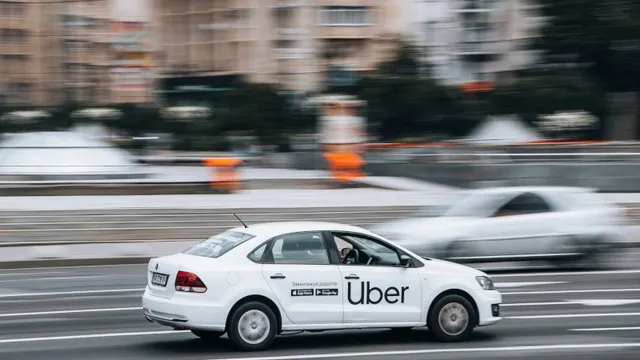
Uber eyes multitrillion-dollar opportunity with robotaxi expansion
Uber eyes multitrillion-dollar opportunity with robotaxi expansion
- Uber plans to roll out autonomous vehicles in several major cities globally, including London, Madrid, and Munich by 2029.
- The company reported a 20% revenue growth in Q4 2025, reaching $14.4 billion, though it fell short of analyst expectations.
- Uber aims to establish itself as the largest facilitator of autonomous vehicle trips in the world, entering a competitive landscape for robotaxi services.
Story
In a strategic move, Uber announced its intention to expand its autonomous vehicle operations into several key cities worldwide, including London, Madrid, Munich, Hong Kong, and a number of cities across the United States. This expansion is part of Uber's broader vision for dominance in the robotaxi market, a sector that the company believes presents a potential 'multitrillion-dollar' opportunity. The announcement comes as Uber reported a strong earnings performance for the fourth quarter of 2025, with revenues reaching $14.4 billion, marking a 20% increase compared to the previous year, although falling short of analyst expectations. As of early 2026, Uber boasts a growing consumer base of over 200 million monthly users who complete more than 40 million trips each day. Uber’s CEO, Dara Khosrowshahi, conveyed enthusiasm regarding the company’s financial outlook, stating that they are entering 2026 with significant cash flow and a clear aim to emerge as the foremost provider of autonomous vehicle trips globally by 2029. Currently, Uber operates its autonomous vehicles in cities such as Abu Dhabi, Dubai, Riyadh, Atlanta, Austin, and Dallas, with reports indicating that growth rates in operations across Atlanta and Austin are particularly robust. This recent expansion marks a significant entry for Uber into both the European and Asian markets for self-driving taxis, and the company is set to leverage partnerships with established technology providers like May Mobility, Lucid, Nuro, Baidu, WeRide, Wayve, and Nvidia to facilitate the testing and deployment of autonomous vehicles in metropolitan areas around the world. Nvidia’s recent introduction of open-source AI models for self-driving technology is expected to play a pivotal role in Uber's development of its robotaxi services. However, Uber is not without competitors. One notable rival, Waymo, recently completed a substantial $16 billion funding round, boosting its valuation to $126 billion as it plans to expand its services to 20 new cities, including pivotal markets like London and Tokyo. As urban transportation continues to evolve, the race for leadership in the autonomous vehicle sector is heating up, with established players like Tesla also striving for success, despite facing challenges such as a reported quarterly revenue drop for the first time in its history. The landscape for autonomous vehicle operations is shifting, and Uber’s aggressive expansion strategy positions it to potentially lead the space as the technology becomes more mainstream in urban mobility.


