

Pakistan and Afghanistan agree to pause hostilities amid rising tensions
Pakistan and Afghanistan agree to pause hostilities amid rising tensions
- Both Pakistan and Afghanistan have suspended hostilities due to international mediation efforts.
- The suspension comes after a deadly airstrike blamed on Pakistan, resulting in significant casualties.
- Despite the temporary pause, high tensions remain, and both countries are prepared to respond to future threats.
Story
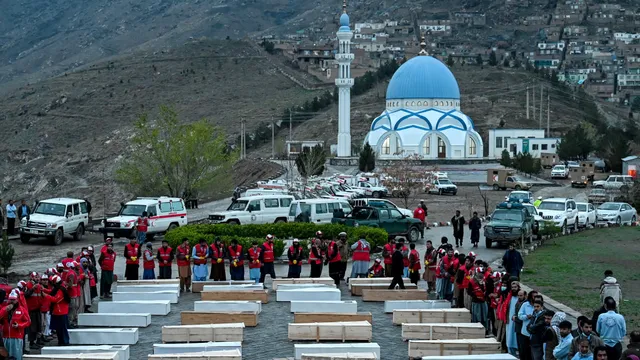
In Afghanistan, tensions escalated significantly in March 2026 with intense fighting reported between Afghan and Pakistani military forces. This surge in conflict was ignited by accusations from the Afghan government that Pakistan conducted a deadly airstrike on a drug rehabilitation hospital in Kabul, resulting in numerous civilian casualties. The attack, which occurred shortly before the Muslim holiday Eid al-Fitr, left at least 408 people dead and many more wounded. The Afghan government condemned the airstrike, with officials asserting it targeted civilians receiving treatment, while Pakistan, on the other hand, maintained that its strikes were aimed at military units and terrorist infrastructures. The situation further deteriorated as both nations engaged in a series of cross-border clashes following the airstrikes, fueling a narrative from both sides that framed the conflict as a defensive reaction to aggression. Amid international calls for a ceasefire and mediation efforts by Saudi Arabia, Turkey, and Qatar, both countries declared a temporary cessation of hostilities ahead of the holiday. Pakistani officials announced that the suspension of strikes would take effect immediately and last until the holiday concluded. However, they emphasized that Pakistan would respond firmly to any further threats, indicating the fragile nature of the truce. This military skirmish has raised significant concerns within the international community, given the strategic geopolitical implications and the presence of extremist organizations in the region. Despite international mediation efforts, the complexities of national pride and the narrative of sovereignty continue to influence both Pakistan and Afghanistan's military actions and civilian impacts, underscoring the deep-rooted challenges to peaceful resolution.
Context
The military relations between Pakistan and Afghanistan have a complex history shaped by geographical, political, and cultural factors. Both nations share a long border that has served as a conduit for trade, migration, and conflict. The historical animosity between these two countries can be traced back to the partition of British India in 1947, which led to the creation of Pakistan and subsequent territorial disputes. The Durand Line, established in 1893, remains a contentious border that Afghanistan does not officially recognize, complicating diplomatic relations and leading to periodic skirmishes along the frontier. This unresolved border issue has fueled mutual suspicions and a lack of trust throughout their respective military establishments over the decades. During the Cold War, both countries sought external alliances that further influenced their military dynamics. Pakistan aligned itself with Western powers, particularly the United States, as part of its strategy to counter Indian influence. On the other hand, Afghanistan initially leaned towards the Soviet Union, creating a geopolitical rift that affected military cooperation and regional stability. Following the Soviet invasion of Afghanistan in 1979, Pakistan's role in supporting the Afghan resistance (Mujahideen) was pivotal, leading to a virtual alliance against the common Soviet enemy. However, the aftermath of the Soviet withdrawal in 1989 marked a period of instability in Afghanistan that gave rise to the Taliban, showcasing how quickly military relations could shift based on changing regimes and alliances. The post-9/11 era introduced new complexities into Pakistan-Afghanistan military relations, with both nations grappling with the rise of extremist groups such as the Taliban and Al-Qaeda. Pakistan faced international scrutiny for its alleged support of the Taliban, while Afghanistan, under the leadership of the U.S.-backed government, sought to establish a strong military response against these groups. Despite shared security threats, both countries struggled to coordinate effectively in counter-terrorism efforts due to ingrained mistrust. Military confrontations, including border clashes and accusations of cross-border terrorism, have further exacerbated tensions between the two nations, diminishing prospects for cooperative security measures. In recent years, efforts have been made on both sides to address these issues, including high-level visits and military dialogues aimed at improving communication and cooperation. However, political instability within Afghanistan, most notably the U.S. withdrawal in 2021 and the resurgence of the Taliban, has significantly impacted the trajectory of military relations. The Taliban's return to power has prompted Pakistan to recalibrate its military strategies in the hope of stabilizing the region. Nonetheless, the future of Pakistan-Afghanistan military relations remains uncertain, as ongoing domestic challenges, regional rivalries, and the need for mutual security cooperation continue to shape the landscape. Without sustained engagement and trust-building measures, both militaries may face persistent challenges in securing a stable and peaceful border.


