

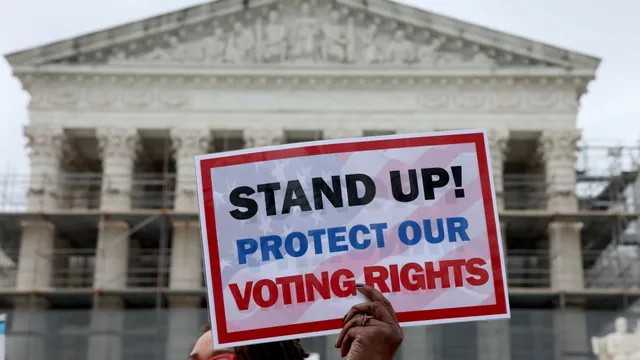
Supreme Court halts Virginia Democrats' redistricting efforts
Supreme Court halts Virginia Democrats' redistricting efforts
- The Supreme Court of the United States denied a request to restore Virginia's new congressional map.
- This decision leaves the current congressional districts intact, which were validated by a Virginia Supreme Court ruling.
- The ruling constitutes a significant setback for Virginia Democrats ahead of the 2026 elections.
Story
In Virginia, the Supreme Court's recent ruling rejected an effort by the state's Democrats to reinstate a voter-approved congressional map. This ruling, which occurred amid a broader national conversation about redistricting following a recent weakening of the Voting Rights Act, leaves the state's current congressional districts intact for the 2026 elections. The Virginia Supreme Court previously found that there were procedural flaws in the process leading up to the referendum that approved the new map. As a result, the state will continue to use its existing districts, where Democrats currently hold six seats compared to five held by Republicans. The proposed map was intended to assist Virginia Democrats in gaining as many as four additional House seats, thereby enhancing their representation in Congress. Virginia's proposed congressional district map garnered voter support in April 2026 amid increasing concerns that other states, such as Texas and North Carolina, had manipulated their maps to favor Republican candidates. However, the Virginia Supreme Court ruled in a close 4-3 decision that the amendment leading to the new redistricting process was flawed because the Virginia legislature violated specific constitutional requirements related to the voting process. In response to the ruling, the Supreme Court chose not to intervene, thus affirming the Virginia Supreme Court's stance. The absence of dissenting opinions or separate opinions from the justices underscored that although the ruling did not inspire public debate amongst the court, it had significant implications for Virginia's political landscape. Virginia Democratic leaders, including Governor Abigail Spanberger, expressed their disappointment, arguing that the court’s decision overrided the will of the citizens who voted in favor of changing the congressional map. Moreover, the backdrop of this legal decision aligns with recent trends in nationwide redistricting disputes, illustrated by a parallel Supreme Court ruling on redistricting in Louisiana that raised concerns about the role of race in drawing electoral maps. The implications of these decisions may further empower state legislatures to redraw maps in ways that could dilute minority representation in several states. Consequently, these ongoing developments across various states highlight a crucial, evolving discussion about the fairness of electoral districts and the safeguarding of voting rights as significant elections approach.


