

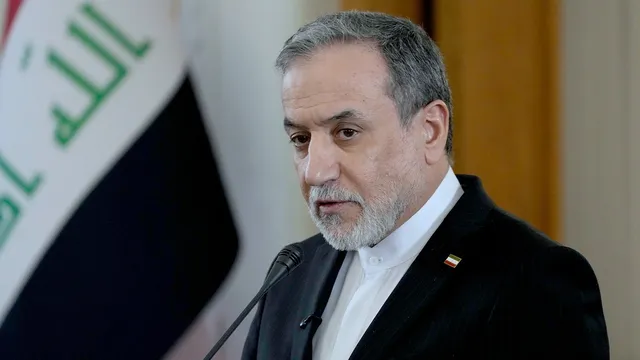
Iran threatens retaliation with full force against U.S. military actions
Iran threatens retaliation with full force against U.S. military actions
- Iran's Foreign Minister Abbas Araghchi issued a direct warning of military retaliation against any U.S. attacks.
- The current unrest saw more than 4,500 reported deaths following violent crackdowns on protests throughout Iran.
- The escalated tensions between Iran and the U.S. could lead to broader conflict in the region.
Story
In recent weeks, widespread protests rocked Iran amid a violent crackdown, resulting in a high death toll estimated at over 4,500 people. As tensions escalated, Iran's Foreign Minister Abbas Araghchi issued a significant warning to the United States, stating that any new military action would be met with overwhelming force. This statement came as U.S. military assets, including aircraft carriers, were repositioned toward the Middle East, raising concerns about a potential larger conflict in the region. Araghchi emphasized that the protests, initially peaceful, were hijacked by foreign elements and domestic antagonists, leading to the drastic measures taken by the Iranian authorities. The Iranian government attributed the unrest primarily to external provocations, particularly from the U.S., accusing it of inciting chaos following its sanctions and military threats. Amidst the systematic crackdown on dissent, internet access remained heavily restricted to curb communication among protesters and limit information dissemination about ongoing violence. As various measures were taken to quell the public outcry, Araghchi's remarks pointed towards a determination to respond militarily if U.S. forces acted, which he argued could lead to a broader conflict affecting global interests. International responses have been varied; while Gulf Arab states have largely urged restraint from the United States, there is persistent anxiety over Iran's actions and its capability to retaliate aggressively. American officials are navigating a complex landscape where military strategies must consider both the immediate threats and long-term regional implications of any military intervention. The dynamics between Iran and the U.S. continue to shape the stability of the Middle East, with both sides holding firm to their positions amidst rising tensions that risk spiraling into confrontation. As the world observes, diplomatic channels remain open yet fraught with mistrust, as each side reassesses the balance between military readiness and the quest for a peaceful resolution. The potential for miscalculation remains high, given the volatile mix of regional geopolitics and historical grievances, making the situation precarious for both Iranian citizens and international stakeholders.
Context
Iran-US relations have a complex and tumultuous history marked by political upheaval, ideological differences, and strategic conflicts. The roots of the contemporary tensions can be traced back to the 1953 CIA-backed coup that overthrew Iran's democratically elected Prime Minister Mohammad Mossadegh, leading to the restoration of the monarchy under Shah Mohammad Reza Pahlavi. This event bred deep resentment among Iranians, culminating in the 1979 Islamic Revolution, which saw the establishment of the Islamic Republic of Iran and a sharp break from Western influence, particularly that of the United States. Following the revolution, Iran and the US became adversaries, characterized by the seizure of the US Embassy in Tehran and the holding of American hostages, which strained diplomatic relations for decades and solidified a narrative of mutual distrust and hostility on both sides. Over the years, key incidents have further exacerbated tensions, including Iran's support for militant groups such as Hezbollah and its contentious nuclear program. The US perceived Iran's actions as a direct threat to regional stability and US interests in the Middle East. In response, the US implemented a series of sanctions aimed at curbing Iran's influence and deterring its nuclear ambitions. The 2015 Joint Comprehensive Plan of Action (JCPOA), which aimed to limit Iran's nuclear capabilities in exchange for the lifting of sanctions, briefly created a thaw in relations. However, the US withdrawal from the agreement in 2018 under President Donald Trump and the subsequent reimposition of sanctions significantly deteriorated rapport, as Iran resumed many of its nuclear activities, raising further concerns among the international community. The geopolitical landscape has also dramatically shifted with the growing influence of regional powers like Saudi Arabia and Israel, who view Iran as a primary adversary. This rivalry fueled proxy conflicts across the region, including in Syria and Yemen, contributing to a cycle of violence and retaliation. The ongoing conflict in Ukraine and rising tensions with China have also complicated US foreign policy priorities, prompting many analysts to evaluate the implications of Iran's role in these broader geopolitical developments. As both nations grapple with domestic challenges and shifts in global power dynamics, the multifaceted relationship continues to evolve, marked by sporadic negotiations and periods of heightened aggression. In recent years, there have been attempts at diplomatic engagement to restore some level of dialogue, particularly during President Joe Biden's administration, which aims to return to a framework similar to the JCPOA. However, divergent priorities, including Iran's missile program and its regional activities, pose formidable challenges to achieving a comprehensive and lasting resolution. The future of Iran-US relations remains uncertain, as both countries navigate their respective national interests, influenced by domestic pressures and the broader geopolitical landscape. The path toward normalization will require a nuanced approach that addresses core grievances while fostering mutual respect and understanding.


