

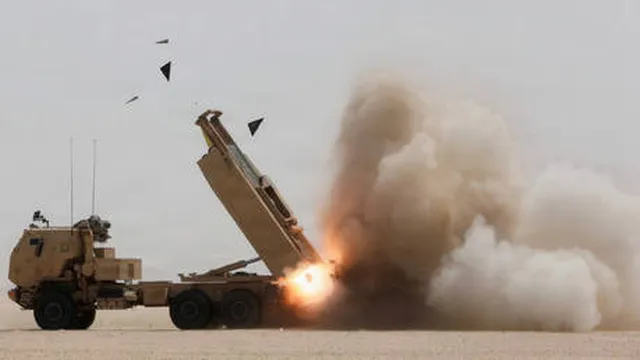
Pentagon enlists automakers to produce military supplies amid conflicts
Pentagon enlists automakers to produce military supplies amid conflicts
- The Pentagon is seeking to increase military supplies by involving civilian car manufacturers.
- General Motors and Ford are in discussions about shifting their production capabilities toward military needs.
- This marks a significant shift in U.S. industrial capacity for defense, reminiscent of World War II mobilization.
Story
In the United States, the Pentagon has engaged discussions with major car manufacturers, particularly General Motors and Ford, regarding the production of military supplies. This initiative aims to enhance the military's operational capabilities as ongoing conflicts in Ukraine and Iran have led to a depletion of U.S. weapons stockpiles. The talks, which commenced prior to the U.S.-Israeli war against Iran that started on February 28, have included senior executives from both companies and involved discussions on how quickly civilian factories could be shifted towards the production of munitions. General Motors has a history of supplying military vehicles through its GM Defense unit, while Ford has not held substantial military contracts in recent times. Defense officials characterized this push toward modern-day industrial mobilization as essential for national security, recalling the historic role of the automotive industry during World War II when car manufacturers adapted their production lines to support the war effort. This intervention comes as the American military is reported to have launched over 850 Tomahawk cruise missiles amid heightened tensions in the region. As military operations continue to strain resources, the discussions with Detroit automakers indicate a significant shift in strategy, marking the first time since WWII that such manufacturers have been directly asked to contribute to the country's munitions supply. Even as General Motors and Ford are evaluated for their potential roles in military production, it is acknowledged that the production of modern weapons systems often involves advanced technology and specialization that goes beyond the traditional capabilities of car manufacturers. With a U.S. military budget projected to reach about $1.5 trillion for the fiscal year 2027, the demand for military supplies is likely to remain high. The evolving geopolitical landscape, particularly the costs associated with the conflict in Iran, which reportedly runs about $2 billion a day for the U.S., has created a pressing need for the government to replenish military inventories quickly. This situation not only places pressure on existing defense contractors but also opens pathways for civilian industries to play a role in national defense, potentially revolutionizing military production similar to historical precedents.
Context
The U.S. military budget increase projected for 2027 is a focal point of significant national interest and global implications. As of today's date, April 16, 2026, the United States finds itself in an evolving geopolitical landscape that demands a reevaluation of its defense strategies and expenditures. With rising tensions in various regions, particularly with notable adversaries, there is an urgent need to fortify military readiness and capabilities. Such an increase symbolizes not only an amplification of defense spending but also a strategic pivot aimed at deterring threats and ensuring national security. Amidst these considerations, the call for a budget increase reflects broader strategic goals, including modernization of the armed forces, enhancement of technological advancements, and an increase in personnel readiness. The U.S. military aims to embrace emerging technologies such as artificial intelligence, cyber capabilities, and advanced weaponry to maintain its competitive edge. Additionally, the budget increase may facilitate expanded training programs, better troop welfare, and improved logistics, all crucial elements for operational effectiveness in a complex security environment. Furthermore, the economic implications of a military budget increase cannot be understated. While proponents argue that a robust military is essential for maintaining peace and stability, critics often raise concerns about the opportunity costs associated with allocating such significant funds to defense rather than domestic programs. Balancing national security needs with social and economic responsibilities remains a contentious issue in U.S. political discourse. Nevertheless, the defense budget narrative is driven by the necessity to respond effectively to emerging threats and commitments to global allies, justifying the anticipated surge in military spending. As 2027 approaches, the specifics of the proposed military budget increase will undergo scrutiny in Congress and among defense analysts. It will be pivotal to observe how these funds will be allocated and whether they align with the comprehensive goals of national security. Ultimately, the U.S. military budget increase represents not just an increase in dollars but serves as a barometer of the nation's strategic priorities and its ability to adapt to an increasingly volatile world.


