

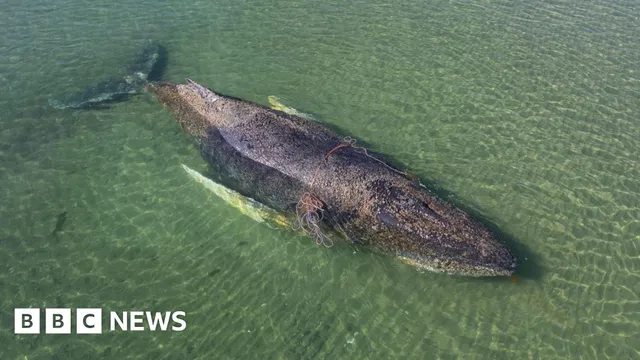
Whale found dead after controversial German rescue operation
Whale found dead after controversial German rescue operation
- A humpback whale stranded in Germany was moved to the North Sea after a private rescue operation in early May.
- The whale's carcass was later found off the coast of Denmark, with concerns raised over possible health risks.
- Wildlife experts criticized the rescue efforts, fearing they caused more distress and ultimately led to the whale's demise.
Story
In early March, a humpback whale became stranded on Timmendorfer Beach in Lübeck Bay, Germany. Initial attempts by German authorities to rescue the whale were unsuccessful, as it repeatedly became stuck after freeing itself. By early May, under the guidance of two German entrepreneurs, the whale was fitted with a tracking device and transported safely into the North Sea via a water-filled barge. However, critics, including wildlife experts, expressed concerns that the private rescue efforts would only exacerbate the whale's distress. On May 14, 2026, a whale carcass was observed off the coast of Anholt, a small Danish island situated between Denmark and Sweden. While Danish authorities had not confirmed the identity of the whale at first, they indicated that conditions were favorable for verification. The Danish Environmental Protection Agency mentioned that they had no immediate plans to remove the carcass or perform a necropsy but warned the public against approaching due to potential health risks. The news raised alarms regarding the possibility of disease transmission and even risks associated with decomposition, such as explosions from gas buildup within the whale. The whale had garnered public attention during the rescue efforts, initially receiving the nicknames "Timmy" or "Hope" from rescuers and reporters. Despite hopes for a successful rehabilitation, several marine conservation organizations had doubts about the whale's recovery post-rescue. The German Oceanographic Museum raised concerns that the animal's weakness might lead to drowning, while the Whale and Dolphin Conservation group predicted it had no long-term chance of survival owing to the skin damage caused by poor water conditions in the Baltic Sea. In conclusion, the failed rescue operation may serve as a cautionary tale regarding human intervention in wildlife rescue scenarios. The incidents surrounding the whale raise ethical questions about the efficacy and impact of private rescue initiatives compared to public efforts. This tragic outcome highlights the importance of assessing the suitability and potential consequences of rescue operations prior to execution, especially when such actions might lead to further distress for the animals involved.
Context
Wildlife rescue initiatives play a critical role in the conservation and rehabilitation of distressed species and ecosystems. These programs often respond to emergencies such as oil spills, habitat destruction, natural disasters, and poaching incidents. By intervening in these situations, wildlife rescue organizations aim to physically rehabilitate injured animals and reintroduce them into their natural habitats. Successful rehabilitation requires a multifaceted approach: treating injuries, providing nutrition, ensuring proper socialization, and conducting behavioral training. The effectiveness of these programs can often be measured by the survival rates of rescued animals post-release, as well as the long-term health of populations in the wild. In addition to direct animal care, wildlife rescue efforts contribute to broader conservation strategies. These organizations frequently engage in public education and outreach activities, raising awareness about the importance of wildlife conservation and the threats facing various species. By informing local communities about how to minimize human-wildlife conflict and advocating for sustainable practices, they strengthen conservation efforts on multiple fronts. Furthermore, data collected through rescue operations can provide invaluable insights into population dynamics, human impacts on wildlife, and the effectiveness of conservation policies. Such information is critical for designing future conservation initiatives and understanding ecological trends. A significant aspect of federal and state wildlife legislation is the support it provides for rescue operations. This legal framework often includes protections for wildlife and funding opportunities for rescue organizations. Effective collaboration between governmental agencies, non-profits, and local communities enhances the potential for successful wildlife interventions. The integration of research and monitoring into rescue operations is also essential, as it allows for adaptive management practices that can respond to changing environmental conditions and species needs. Additionally, this partnership fosters shared responsibilities that empower communities to take ownership of local wildlife conservation efforts. Despite the successes observed in many wildlife rescue initiatives, there remain substantial challenges. Resource limitations, including funding and trained personnel, can hinder rescue operations. Furthermore, some species are at such high risk of extinction that even successful rescue and rehabilitation efforts cannot guarantee the sustainability of their populations. In light of these challenges, ongoing advocacy for systemic changes in conservation policy and land management practices is vital. By ensuring that wildlife rescue operations are well-supported and strategically integrated within a larger conservation framework, we can maximize their effectiveness and make meaningful progress towards preserving biodiversity and restoring ecosystems.


