

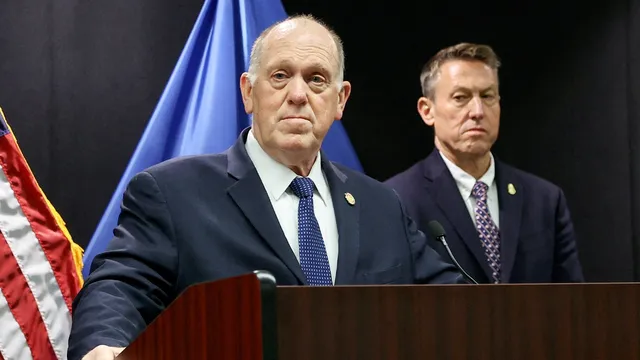
Tom Homan disbands illegal anti-ICE roadblocks in Minneapolis
Tom Homan disbands illegal anti-ICE roadblocks in Minneapolis
- Anti-ICE activists in Minneapolis set up checkpoints to identify federal agents, stopping and questioning drivers.
- Tom Homan criticized the roadblocks as illegal and immediately ordered their disbandment after speaking with the local police chief.
- The incident reflects growing tensions around immigration enforcement and the complex relationship between local activism and federal policies.
Story
In the United States, particularly in Minneapolis, anti-Immigration and Customs Enforcement (ICE) activists have established makeshift checkpoints to monitor and challenge federal agents operating in the area. During their actions, these activists stopped vehicles, questioned drivers, and scrutinized their identification to identify potential ICE officers. Video evidence captured these incidents, showcasing individuals dressed in masks and using makeshift barricades to halt traffic, all while claiming local support for their efforts. This initiative occurred in neighborhoods densely populated by the Somali community, often referred to as 'Little Mogadishu.' As tensions escalated regarding immigration enforcement, local law enforcement was reportedly absent during these activities, prompting concern among community members about public safety. The situation drew national attention, reaching the White House, where Tom Homan, the White House border czar, described the actions of these activists as a 'joke.' He asserted that these roadblocks were illegal and detrimental to the community. Responding to the situation, Homan communicated with the Minneapolis police chief, leading to the disbandment of the roadblocks shortly after the conversation. Homan emphasized the importance of collaboration between local law enforcement and federal authorities, stating that the enforcement approach aims to minimize disturbances and ensure safety. This collaboration led to the decision to withdraw 700 federal agents from the Twin Cities, suggesting a reduction in direct federal presence amid an environment of increasing cooperation. Homan's remarks reflect a broader dialogue about immigration policies in Minnesota, wherein he advocates for better communication with state and local leaders to manage the complexities surrounding the release of detainees. His interactions with officials, including Minnesota Governor Tim Walz, Attorney General Keith Ellison, and Minneapolis Mayor Jacob Frey, highlight the push for more regional autonomy in handling immigration-related issues. Local leaders expressed varying perspectives on enforcement strategies, indicating a potential shift toward state-led initiatives addressing incidents of violence and ensuring accountability following recent tragic events within the community. The grassroots movements opposing ICE have gained traction amid national debates regarding immigration enforcement and federal policies. Homan's criticism echoes the sentiments of those who argue that such actions not only undermine law enforcement but also create divisions within the communities they purport to protect. Quickly dismantled to ensure traffic safety and community order, the anti-ICE checkpoints symbolized the heightened polarization surrounding federal immigration policies, signaling an ongoing struggle between local activism and federal enforcement actions. The future of such initiatives and their repercussions on community safety and cohesion remains to be seen as national discussions on immigration continue to evolve.


