

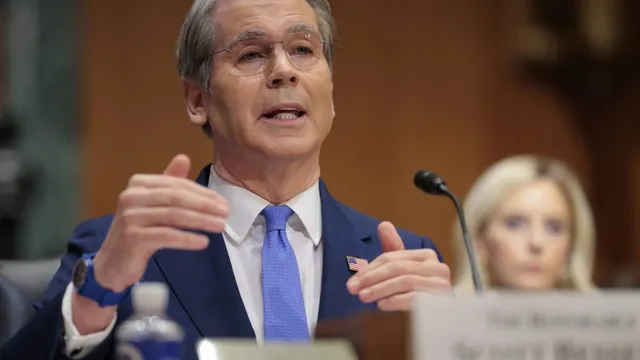
Scott Bessent claims inflation is a short-term issue amid manufacturing growth
Scott Bessent claims inflation is a short-term issue amid manufacturing growth
- The U.S. has seen a surge in manufacturing jobs, with significant expansions in factories and new projects announced.
- Scott Bessent attributes this growth to favorable tax policies, while Torsten Slok highlights the industrial renaissance as a key economic driver.
- Despite the positive developments, the labor market remains challenging for many workers, raising concerns about the uneven distribution of benefits.
Story
In the United States, a significant shift in the manufacturing sector has been observed, with approximately 90,000 new non-residential construction jobs linked to factory expansions. Notable developments include Boeing's 50% expansion of its plant in Charleston, South Carolina, which is expected to create 1,000 high-paying manufacturing jobs, and new facilities from John Deere in Indiana and North Carolina. Additionally, pharmaceutical companies are reshoring production, contributing to a broader industrial build-out. Since 2020, over 130 semiconductor-related projects worth more than $600 billion have been announced, alongside record increases in clean energy capacity, particularly in select states. Scott Bessent attributes this manufacturing renaissance to tax cuts and full-expensing provisions, which he argues have positively influenced investment decisions in the U.S. For instance, Winnebago's decision to establish a battery research facility in Florida was driven by favorable tax conditions that improved its internal rate of return, leading to job creation in the state. Meanwhile, Apollo Global Management Chief Economist Torsten Slok has echoed similar sentiments, describing the U.S. as undergoing an industrial renaissance fueled by factory construction and significant investments in semiconductors and clean energy. In his 2026 outlook, Slok identified the industrial surge as a crucial tailwind for the economy, alongside advancements in AI and fiscal stimulus, which have contributed to a more resilient economic landscape despite challenges such as inflation and rising interest rates. However, both Bessent and Slok acknowledge that the benefits of this renaissance are not evenly distributed, particularly in the labor market. While they agree on the potential for a manufacturing boom, the current employment figures in the sector remain only slightly above pre-pandemic levels, with projections indicating a decline in manufacturing's share of total employment over the next decade. This situation raises questions about the perceived stagnation many workers experience, especially entry-level employees who are often excluded from capital-intensive projects. The labor market has shown signs of weakness, with a low-hire, low-fire economy emerging, particularly affecting younger workers. As discussions continue on Capitol Hill, Bessent and his allies argue that inflationary pressures in housing, healthcare, and childcare are more significant and persistent under the Biden administration, while they advocate for tax cuts and deregulation as means to alleviate the cost of living. Bessent has expressed confidence that inflation is merely a short-term issue, while Slok warns that the investment boom may lead to higher interest rates and persistent inflation risks that cannot be dismissed as temporary.


