

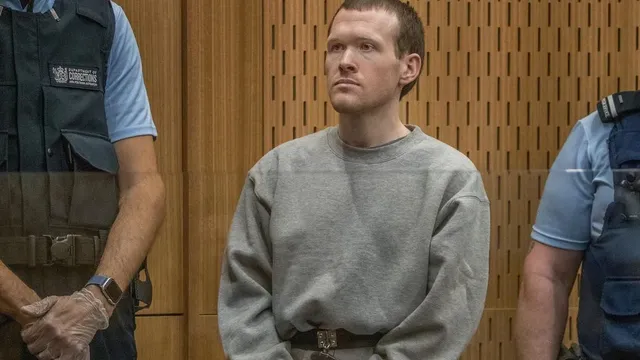
Brenton Tarrant challenges his guilty pleas amid prison claims
Brenton Tarrant challenges his guilty pleas amid prison claims
- Brenton Tarrant, responsible for the Christchurch mosque massacre, is appealing his guilty pleas alleging mental incapacity due to prison conditions.
- His claims include deteriorating mental health in solitary confinement leading to a feeling of irrationality when he pleaded guilty.
- The outcome of the appeal could potentially lead to a retrial of Tarrant, reopening traumatic memories for victims' families.
Story
In New Zealand, Brenton Tarrant, who carried out the deadly mass shooting at two mosques in Christchurch in March 2019, is appealing his guilty pleas and life sentence without parole. He murdered 51 individuals and injured many others during the attack, which was broadcast live on social media and deemed one of the darkest days in the country’s history. Tarrant, now 35 years old, claims he was not mentally fit to plead guilty due to the harsh conditions he faced in prison, including solitary confinement and limited contact with others. He argues that his mental health deteriorated significantly while awaiting trial, which ultimately led him to admit guilt in March 2020. Tarrant's appeal was filed later than usual, raising concerns due to standard procedures that require such filings to be made within a specific timeframe after sentencing. This appeal hearing, taking place in Wellington, is expected to draw attention from victims’ families, many of whom are concerned that revisiting the legal case will reopen wounds from the traumatic event. If successful in his bid to withdraw his guilty pleas, Tarrant could return to trial for the charges of terrorism, murder, and attempted murder that he previously admitted to. His legal strategy has raised ethical questions within the public sphere as many see it as an attempt to regain notoriety and disrupt the healing process for families affected by his violent act. The attack also prompted New Zealand's government to implement stricter gun control laws, banning specific types of semi-automatic weapons, and initiated a buy-back scheme for firearms within a month of the shootings.
Context
The Christchurch shooting on March 15, 2019, was a tragic event that prompted significant changes to New Zealand's gun laws. In the aftermath, the government conducted a comprehensive review of the existing firearm regulations, leading to the enactment of the Arms (Prohibited Firearms, Magazines, and Parts) Amendment Act 2019. This legislation aimed to enhance public safety by instituting stricter controls over firearms that were deemed to pose a higher risk to society. The government responded rapidly, with a public outcry for reform leading to an outright ban on semi-automatic firearms and high-capacity magazines, which had been used in the attack. This represented one of the most substantial shifts in New Zealand's gun policy in decades, reflecting a collective determination to prevent similar tragedies in the future. The reform process was characterized by extensive consultation with stakeholders, including gun owners, community groups, and law enforcement agencies. The government sought to balance the rights of responsible gun owners with the need for enhanced public safety. Central to the new legislation was the establishment of a buyback scheme, allowing gun owners to surrender their prohibited firearms in exchange for compensation. This initiative, while met with varied responses from the public, signified an effort to reduce the number of dangerous weapons in circulation. By July 2020, reports indicated that over 50,000 firearms had been handed in, demonstrating the effectiveness of the buyback program in disarming the civilian population of high-risk weapons. In addition to the ban on semi-automatic firearms, the legislation also included measures aimed at improving the licensing and registration processes for all firearm owners. These measures involved enhanced scrutiny of applications for firearm licenses, increased penalties for violations of gun laws, and more rigorous training and safety requirements for gun ownership. The government aimed to create a robust framework to ensure that only qualified individuals could access firearms, fostering a culture of responsibility and safety among gun owners. As a result, public perceptions of gun ownership and control shifted significantly, with a majority of New Zealanders expressing support for the new regulations. Overall, the changes to New Zealand's gun laws following the Christchurch shooting mark a pivotal moment in the nation's approach to firearm regulation. The actions taken were not only a direct response to a national tragedy but also served to reinforce New Zealand's commitment to prioritizing the safety of its citizens. This comprehensive legislative reform demonstrates an acknowledgment of the need for a more stringent regulatory environment regarding firearms, setting a precedent for how countries can effectively respond to mass shootings while maintaining a balance with the rights of lawful gun owners. The ongoing impact of these changes continues to be studied, providing valuable insights into the effectiveness of such measures in preventing gun violence.


