

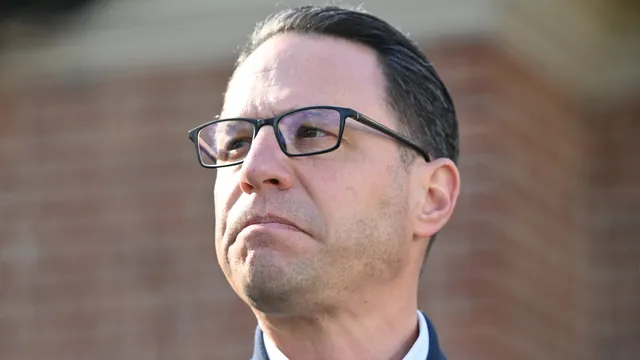
Josh Shapiro criticizes JD Vance for failing to address antisemitism
Josh Shapiro criticizes JD Vance for failing to address antisemitism
- Josh Shapiro criticized Vice President JD Vance for his Holocaust Remembrance Day statement lacking specific references to Jewish victims.
- Vance's spokesperson defended him against these accusations, framing them as a misrepresentation of his views on antisemitism.
- The exchange highlights tensions within the Republican Party regarding the importance of addressing hate and prejudice, especially leading up to elections.
Story
In recent events, Pennsylvania's Governor Josh Shapiro has taken a strong stance against perceived antisemitism within the Republican Party, implicating Vice President JD Vance in his accusations. Shapiro, who is openly Jewish and promoting his memoir, articulated his disappointment that Vance's statement on Holocaust Remembrance Day omitted specific references to Jewish victims. The governor believes this reflects a broader trend within the GOP, where antisemitic sentiments are being overlooked or normalized. In his critique, Shapiro emphasized that remembering the Holocaust is essential to prevent future atrocities, thereby asserting his responsibility as a leader to address and combat such hate. Conversely, Vance's spokesperson characterized Shapiro's accusations as a diversion from his own failures to speak explicitly about violence against Jews. This rebuttal highlights a faction within the Republican Party that aims to defend Vance's record with the Jewish community, arguing that the criticism may reflect a misunderstanding of his intentions. Such dialogues underscore a growing, contentious relationship between different factions within the party, specifically concerning their commitments to addressing antisemitism. Further complicating the narrative, critics from both sides of the political spectrum have expressed disappointment regarding Vance's initial statement. Not only did it fail to mention Jewish individuals specifically, but high-profile commentators and groups, including Tablet Magazine and the Jewish Democratic Council of America, have criticized him for sidestepping the critical issue of Holocaust remembrance. This reinforces a clear delineation between those who advocate against antisemitism and those who are perceived as enabling such sentiments. As elections draw near, Shapiro's campaign promises to focus on the threats posed by rising antisemitism, which he frames as detrimental not only to Jewish communities but to the fabric of American society as a whole. His statements align with broader concerns regarding political violence and the implications of dangerous rhetoric amid a polarized political climate. By continuing to spotlight the issue, Shapiro hopes to mobilize support and raise awareness about the ongoing challenges associated with political power and community safety, ultimately using his platform to champion a more inclusive and aware political discourse.


