
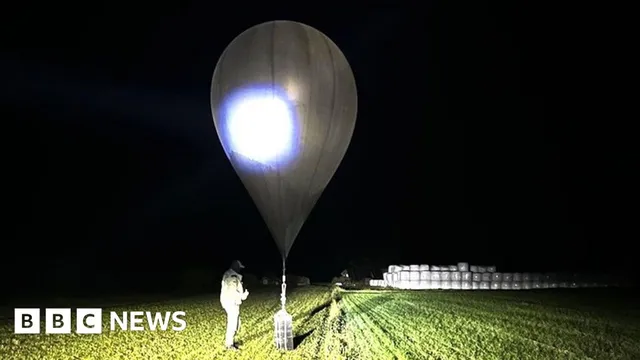
Lithuania sounds alarm over security risks from Belarusian balloons
- Lithuanian authorities reported that around 600 balloons and nearly 200 drones intruded into its airspace this year, prompting national security concerns.
- Prime Minister Inga Ruginiene has condemned these incursions from Belarus as a serious threat, labeling them a 'hybrid attack.'
- In response, Lithuania declared a national emergency and closed border checkpoints with Belarus, aiming to enhance security and protect civil aviation.
Story
On December 9, 2025, Lithuania declared a national emergency due to security threats posed by balloons carrying smuggled goods from Belarus. The Lithuanian government has reported a surge in the number of balloons, estimated at 600 this year, along with nearly 200 drone incursions into its airspace. This alarming situation has led to the temporary closure of Vilnius airport multiple times, raising concerns about national security and the safety of civil aviation. Prime Minister Inga Ruginiene labeled these incursions as a 'hybrid attack' from Belarus, asserting that they have significant implications for both aviation security and international law. The response from Belarusian authorities has been dismissive, with President Alexander Lukashenko denying any state involvement in these operations and suggesting that Lithuania is politicizing the issue. This statement, however, contrasts with Lithuania's claims, which draw upon evidence linking these incursions to deliberate actions aimed at destabilizing the nation. The situation is further exacerbated by the historical context of tensions between Lithuania and Belarus, particularly following a wave of irregular migrants from the Middle East entering Lithuania from Belarus four years ago. The ongoing tension is indicative of broader geopolitical tensions involving Russia and its allies. Lithuania's national emergency declaration is poised to empower its armed forces with additional operational capacities to effectively tackle the balloon threat. Law enforcement agencies are now better equipped to respond quickly, safeguarding both national security and civil aviation. Moreover, the Lithuanian government has taken proactive measures by closing two checkpoints along the Belarusian border for three weeks in response to the situation. This decision was made to mitigate further incursions and protect aviation infrastructure. The blockade of Lithuanian trucks by Belarus has also compounded the economic impacts of this crisis as hundreds of vehicles remain stranded as a result. Reflecting a growing concern over hybrid warfare tactics employed within Europe, this incident has garnered attention over the threat posed by non-traditional forms of aggression, including the use of balloons and drones. The European Union has previously condemned a hybrid campaign associated with Russia, indicating a notable shift in how countries perceive and handle unconventional threats, which may include increased military posture and readiness against such provocations in the future.
Context
The historical tensions between Lithuania and Belarus have deep roots that intertwine with the broader narratives of nationalism and regional identity. Lithuania, with its own independent state established in 1918 after World War I, experienced a turbulent history characterized by occupation and domination by neighboring powers, including the Soviet Union. Belarus, which shares a significant cultural and linguistic connection with Lithuania, emerged from similar historical trajectories, yet it has maintained a closer alignment with Moscow, particularly after the dissolution of the USSR in 1991. The dissonance in their political orientations was exacerbated by Lithuania's strong push towards European integration and democratic governance, while Belarus opted for a more authoritarian model under President Alexander Lukashenko. This divergence became increasingly pronounced throughout the 1990s and into the 21st century, laying the foundation for ongoing bilateral tensions. In recent years, tensions escalated particularly around issues of political alignment and human rights. Lithuania has been vocal in its criticisms of Lukashenko's regime, particularly following the controversial 2020 presidential elections that were widely condemned as fraudulent. The resulting protests in Belarus drew significant international attention, with Lithuania positioning itself as a supporter of the Belarusian people's quest for democracy. This support included hosting opposition leaders and activists, further straining relations with Minsk. Consequently, Belarus accused Lithuania of interference in its domestic affairs and responded with rhetoric that suggested it regarded Lithuania as a potential adversary, thereby heightening anxieties within the region regarding security and stability. Geopolitical dynamics have further complicated Lithuania-Belarus relations. The presence and activities of Russian military forces in Belarus have intensified Lithuania's security concerns, given the latter’s strategic location as a NATO member. Lithuania has sought to bolster its defense capabilities and has actively engaged in cooperative security measures within the NATO alliance, which Belarus perceives as a direct threat. The construction of the Astravyets nuclear power plant in Belarus near the Lithuanian border has also emerged as a contentious issue, with Lithuania arguing that it does not meet international safety standards and poses environmental risks. This infrastructure project symbolizes the geopolitical tug-of-war within the region, highlighting the stark differences in how both nations view energy security and environmental responsibility. The historical, political, and security dimensions of Lithuania-Belarus tensions are emblematic of a broader struggle for influence and identity in Eastern Europe. The rivalry continues to unfold against a backdrop of shifting alliances and domestic pressures, particularly as both countries navigate their roles within the evolving European and Eurasian landscapes. The path forward remains fraught with challenges, as Lithuania seeks to assert its sovereignty and democratic values while grappling with the complexities of its relationship with Belarus. The future of their interactions will likely continue to be shaped by historical grievances, alignment with major powers, and the quest for regional stability.
