

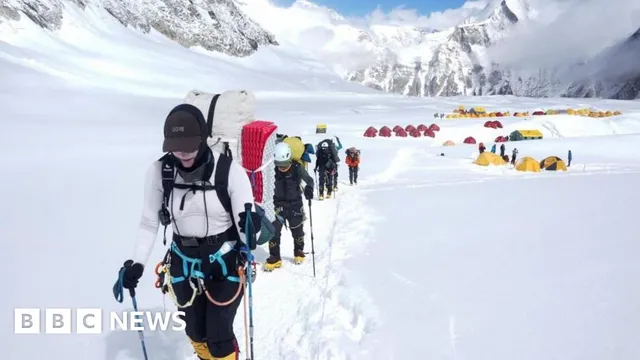
Climbers face danger on Everest as three die in tragic accidents
Climbers face danger on Everest as three die in tragic accidents
- Nearly 1,000 climbers are set to attempt the ascent of Mount Everest this season amid safety concerns.
- An elite team of Nepali climbers has cleared the route blocked by a giant chunk of ice.
- Three climbers have lost their lives in recent weeks, heightening concerns about climbing safety.
Story
In Nepal, nearly 1,000 climbers are preparing to ascend Mount Everest this season, amidst growing safety concerns due to overcrowding and recent tragedies on the mountain. Following weeks of delays caused by a massive ice serac that blocked the primary route, an elite team of Nepali climbers successfully cleared the path to the summit. With about 500 foreign climbers having received permits this year, the urgency for climbing before the weather worsens increases, leading to apprehensions about potential traffic jams on the ascent. The ice blockage resulted in a buildup of climbers at Everest Base Camp, where many had remained stuck for a considerable time. The situation is further complicated by the closure of the northern route to foreign climbers, as the Chinese authorities have decided to halt access. This has led to an influx of climbers opting for the southern route, which could exacerbate the potential for overcrowding and associated risks. Experts and seasoned climbers have raised alarms about the safety of scaling Everest this year, especially with many climbers needing to attempt their ascent over a shorter timeframe. Purnima Shrestha, a prominent climber making her sixth attempt at the summit, voiced her concerns, indicating how delays in route openings could create dangerous scenarios on the mountain. Coordination efforts by expedition associations and local officials are ongoing, aiming to manage the climbing efforts in a manner that prevents dangerous congestion near the summit. However, the precarious nature of climbing, particularly during peak season, raises many uncertainties. As the climbing season progresses, the number of climbers increases, collectively making their way up the mountain. Sadly, recent weeks have also seen tragedies, including the deaths of three climbers. The casualties have drawn attention to the risks inherent in such expeditions, highlighting the importance of safety measures amid the thrill of challenging the world's highest peak. The climbing community must grapple with these risks, as the recent losses serve as stark reminders of the potential consequences of climbing Everest, especially as more climbers seek to reach its summit following lengthy delays.
Context
Climbing Mount Everest presents climbers with numerous challenges, and safety measures are crucial to protect both climbers' lives and their well-being. The high altitude of Everest, coupled with unpredictable weather, creates a harsh environment that can quickly become dangerous. Therefore, thorough preparation, including physical training, acclimatization, and proper gear, cannot be overstated. Climbers must engage in a comprehensive physical training program tailored to build endurance, strength, and flexibility. Additionally, acclimatization, or gradually exposing the body to high altitudes, is vital to minimize the risk of altitude sickness, which can have severe and life-threatening consequences. While individual fitness levels vary, being in top physical condition significantly enhances a climber's chances of success and survival on Everest. Proper gear and equipment are essential in ensuring safety for climbers on Everest. This includes high-quality clothing designed for extreme temperatures, specialized footwear, and climbing gear that can withstand the harsh conditions. Safety equipment also plays a critical role; items such as harnesses, ropes, and anchors must meet strict safety standards. Moreover, climbers should use reliable communication tools and GPS devices, as staying connected and knowing one’s location can make a difference in critical situations. Acquiring the right gear can often be the line between life and death in the unforgiving environment of Everest, emphasizing the need for thorough research and investment in quality equipment before the expedition. Another notable aspect of safety measures involves employing skilled guides and climbing with experienced teams. Professional guides not only bring valuable experience to the ascent but also possess knowledge of the mountain’s conditions, allowing them to make informed decisions about when to climb or retreat. Team dynamics also play a crucial role; maintaining open communication and a clear understanding of each member's capabilities is vital for ensuring group safety. Organized climbs usually have support from base camp, where supplies are managed, and climbers can rest and acclimatize, reducing the strain of the high-altitude challenge. It is also important for teams to establish clear protocols for emergencies, including how to respond to altitude sickness, injuries, or severe weather events. Lastly, climbers should adhere to environmental and ethical guidelines while on Everest to ensure the preservation of this majestic natural wonder. The increase in the number of climbers has led to issues regarding waste management and overcrowding, which can further compromise safety. Educating climbers about minimizing their environmental footprint and following the established routes can help mitigate these issues. This includes following Leave No Trace principles to respect the mountain and future climbers. In conclusion, safety measures on Everest encompass a multi-faceted approach that involves physical preparation, appropriate gear, experienced guidance, and respect for the mountain environment.


