

Lasers revolutionize restoration of iconic Roman column
Lasers revolutionize restoration of iconic Roman column
- Restorers in Rome used advanced laser technology to clean an ancient marble column.
- The project commenced in April and is funded by the European recovery fund.
- This restoration showcases modern methods that prioritize material preservation and authentic representation.
Story
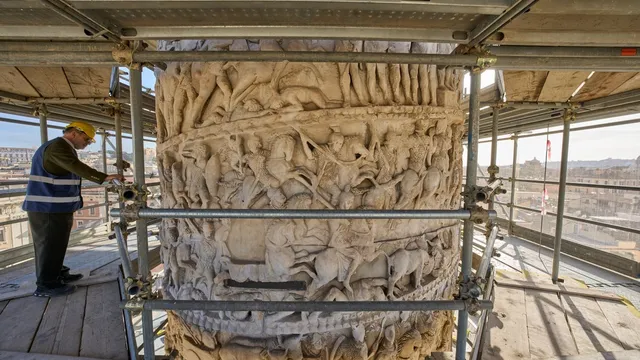
In the heart of Rome, a significant restoration project was undertaken on an ancient marble column located in the piazza outside the prime minister’s office. This impressive 47-meter tall column, constructed between A.D. 180 and 193 during the reign of Emperor Marcus Aurelius, had not seen restoration in approximately 40 years. During its previous restoration in the 1980s, traditional cleaning methods involving tiny brushes were employed. However, the modern restorers have now introduced laser technology to remove layers of dust and grime that have built up over the decades. This project is notable as it highlights a shift in restoration techniques toward more advanced and respectful methods that prioritize the preservation of materials. The restoration team, consisting of 18 skilled professionals, has utilized short-pulse lasers alongside other cleaning agents like chemical wraps and sponges to ensure a thorough process while mitigating risks of further damage. This effort also includes addressing deterioration caused by environmental factors, such as erosion and water intrusion, which have affected the engraved figures and their details. The remarkable relief carvings on the column recount the exploits of Marcus Aurelius and display vivid scenes of ancient battles, including harrowing depictions of soldiers and their captives. As work progressed, journalists were invited to view the restoration up close, ascending 16 levels of scaffolding to observe the details and challenges faced by the restorers. Funding for this 2-million-euro project was partly sourced from the post-pandemic European recovery fund, reflecting a broader commitment to preserving cultural heritage. Work on the column commenced in April and is anticipated to conclude in June, resulting in a new nighttime illumination system for the monument, enhancing its visibility and allowing the stories depicted in the reliefs to be seen even after sunset.
Context
The history of the marble column in Rome is a significant chapter in the city’s storied architectural legacy, echoing the grandeur and artistry of ancient Roman civilization. The use of marble for columns became prominent during the late Republic and continued into the Imperial period, reflecting not just the aesthetic preferences of the Romans but also their advances in technology and engineering. Marble, being a durable and easily workable stone, allowed for intricate carvings and elaborate designs that adorned public buildings, temples, and monuments. Among the notable marble columns in Rome are the Trajan's Column and the Column of Marcus Aurelius, which serve as testament to the skill and creativity of Roman artisans and the cultural significance placed on commemorative architecture during these times. Trajan's Column, celebrated for its spiral relief that narrates the story of the Dacian Wars, was constructed in AD 113 and stands over 38 meters tall. This iconic structure not only symbolizes imperial power but also serves as an important historical record of military victories and Roman life. The column’s design showcases the technical prowess of Roman engineering, including its hollow interior which allowed for a viewing platform at the top, offering a panoramic view of the surrounding area. On the other hand, the Column of Marcus Aurelius, built around AD 180, mirrors its predecessor in form but is distinguished by its unique reliefs that depict various scenes of warfare and the Emperor’s philosophical ideals. The process of quarrying and transporting marble in ancient Rome was a monumental task, often involving large teams of workers and specialized techniques. Quarries in regions like Carrara in Tuscany supplied high-quality marble that was then transported via roads and waterways, reflecting a highly organized logistical effort. The use of marble not only symbolized wealth and power for patrons but also conveyed messages of stability and permanence, which were essential qualities for the state’s propaganda. As a result, marble columns became a lasting legacy of the Roman Empire, influencing later architectural styles and movements throughout history, including the Renaissance and Baroque periods. Today, the remnants of these marble columns continue to captivate scholars and tourists alike, serving as enduring symbols of Rome’s historical and cultural heritage. These columns not only demonstrate the artistry of ancient Roman society but also prompt ongoing discussions about their implications for the understanding of Roman values, aesthetics, and technological advancements. The preservation and study of these structures remain critical in appreciating the complexities of ancient Rome and its lasting impact on architecture around the world.


