

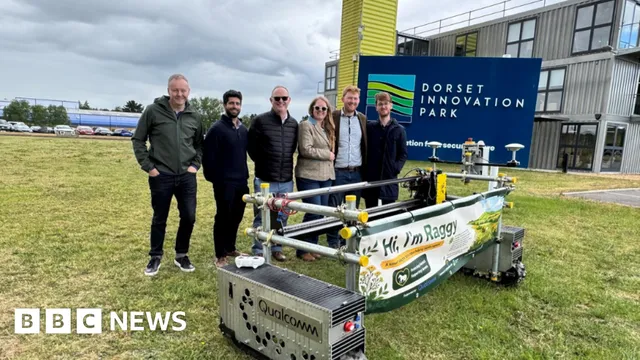
Robot Raggy begins trials to eliminate deadly ragwort in Dorset
Robot Raggy begins trials to eliminate deadly ragwort in Dorset
- Raggy, an autonomous robot, is designed to detect and remove ragwort, a poisonous weed threatening livestock.
- Field trials will take place across various farms in Dorset this summer.
- The initiative represents a significant step towards innovative and environmentally friendly agricultural practices.
Story
In the United Kingdom, a new autonomous farm robot named Raggy is set to begin field trials this summer in Dorset. Developed by the Cornish firm Robotriks in collaboration with Dorset Council and Telint, Raggy is designed to detect and remove ragwort, a poisonous weed that poses a significant threat to livestock health. The trials will take place across various farms and land in Dorset, specifically at the Dorset Innovation Park near Wareham. Ragwort is known for its harmful effects on horses and livestock, making its control essential for maintaining safe grazing conditions. Traditionally, ragwort is removed by hand, a method that is labor-intensive and costly, often posing risks to both people and the environment. The introduction of Raggy aims to provide a more efficient and environmentally friendly solution to this problem. The Royal Horticultural Society has classified ragwort as a serious weed in paddocks and pastures, although it is less of a concern in garden settings. The plant is also recognized for its role in supporting wildlife, particularly pollinators like bees and butterflies, which complicates its removal in certain areas. The development of Raggy reflects a growing trend in agriculture towards the use of innovative technology to address traditional farming challenges. Jake Shaw-Sutton, director of Robotriks, emphasized that the Robotic Traction Unit (RTU) was specifically built for real-life farm conditions, indicating a focus on practicality and effectiveness. Nick Ireland, leader of Dorset Council, expressed enthusiasm for the project, highlighting the importance of testing and evaluating such environmentally sensitive solutions on local land. As the trials commence, the success of Raggy could pave the way for broader adoption of robotic solutions in agriculture, potentially improving the quality of life for both livestock and humans. The initiative showcases Dorset's commitment to embracing technology to enhance agricultural practices while addressing environmental concerns. The outcome of these trials will be closely monitored, as they may influence future strategies for weed control and sustainable farming practices in the region.
Context
strategic global impact shift impact policy strategic global data data impact global insight shift market strategic strategic market policy data global insight insight geopolitical data market insight geopolitical economic shift market policy global shift economic global global data data economic policy strategic market market global analysis economic trends market trends data geopolitical data strategic geopolitical data geopolitical geopolitical strategic geopolitical global impact analysis strategic strategic global policy insight economic trends data analysis analysis insight market analysis trends trends global shift...


