

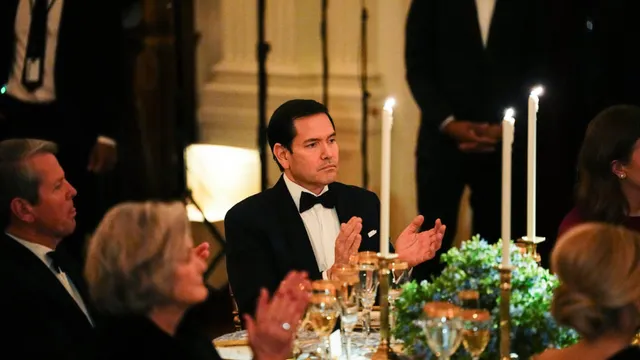
Rubio visits Caribbean to assert U.S. interests and enhance regional stability
Rubio visits Caribbean to assert U.S. interests and enhance regional stability
- Marco Rubio traveled to St. Kitts and Nevis to participate in a CARICOM summit focused on U.S.-Caribbean relations.
- The visit occurred after a notable military operation against Nicolás Maduro, underscoring the relevance of U.S. interests in the region.
- Rubio's discussions aimed to enhance cooperation on regional security, trade, and economic development amidst shifting foreign policy priorities.
Story
In a significant diplomatic move, Secretary of State Marco Rubio traveled to St. Kitts and Nevis to reinforce the United States' interests in the Western Hemisphere shortly after a U.S. military operation that ousted Venezuelan President Nicolás Maduro. This visit occurred against the backdrop of heightened U.S. military activities in the Middle East due to escalating tensions with Iran. Rubio's one-day trip was designated for participation in the Caribbean Community (CARICOM) summit, reflecting a long-standing U.S. intention to maintain an influential presence in the region, particularly concerning drug trafficking and illegal migration concerns that have resonated throughout the Caribbean nations. The trip's timing was particularly notable, just a month post-operation against Maduro, who faces serious allegations linked to drug cartels and has been accused of facilitating extensive cocaine shipments into the United States. While some nations within the region have expressed concerns regarding U.S. military actions, others have shown support for the administration's initiatives to curb drug trafficking. Rubio, known for advocating a more assertive U.S. role in the Western Hemisphere, sought to promote relationships with Caribbean leaders amid the shifting focus of U.S. foreign policy, which at that time was increasingly centered on Iran provocation. By likening the administration's approach in the region to the Monroe Doctrine, Rubio aimed to underscore the intention to limit foreign influences in the Americas, asserting the primacy of U.S. interests. His discussions at the CARICOM meeting were also meant to identify collaborative measures for enhancing regional security and economic development. While countries like Venezuela and Mexico do not hold full membership within CARICOM, they maintain observer status, indicative of their relevance in regional stability discussions. During his visit, Rubio was expected to meet with various officials to strategize on trade opportunities and regional stability as part of a broader commitment to enhance prosperity across the hemisphere. His presence illustrated the U.S. administration's dedication to supporting Caribbean nations amidst rising geopolitical challenges, signifying a potential shift toward more robust U.S. engagement in the area. The trip reflected a critical decision to reinforce diplomatic ties while addressing pressing issues like illegal migration, trade, and drug trafficking, effectively intertwining U.S. policy with local concerns of instability and security.


