

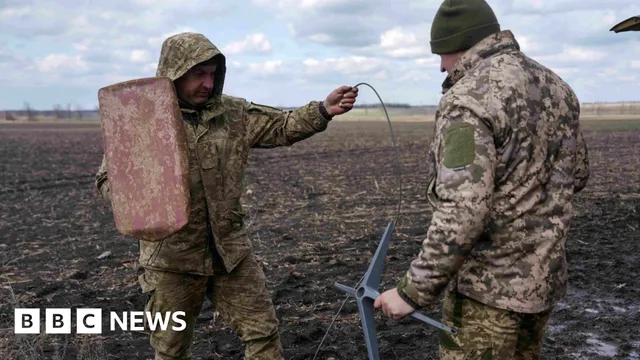
Elon Musk cuts off Starlink access to Russian forces
Elon Musk cuts off Starlink access to Russian forces
- In February 2026, Ukraine's defense minister requested Elon Musk to block Russian access to Starlink systems.
- Ukrainian troops reported improvements in military effectiveness as a result of this restriction.
- The loss of Starlink access significantly hampered Russian offensive capabilities on the battlefield.
Story
In early February 2026, Ukrainian troops reported that Russian forces have been facing significant setbacks due to restricted access to Starlink systems, provided by Elon Musk's SpaceX. This change came after Ukraine's defense minister, Mykhailo Fedorov, formally requested the blocking of Russian access following concerns over the use of Starlink terminals in military operations against Ukraine. Reports indicated that Russian forces utilized Starlink systems for drone operations, including a deadly attack involving a Geran-2 drone on a passenger train in the Kharkiv region. As Ukrainian artillery targeted these terminals near the front lines, there were notable improvements in Ukrainian military operations. The SBU, Ukraine's Security Service, identified efforts by Russian forces to bribe Ukrainian citizens to register Starlink terminals for them, which they sought to counteract. Furthermore, there were indications of psychological impacts among Russian soldiers, with warnings issued by the FSB, Russia's security service, advising soldiers against such scams. On the battlefield, Ukrainian soldiers observed significant alterations in Russian tactics. Instead of using Starlink for drone control, Russians began quickly adapting to wired communication methods, which limited their operational effectiveness. Ukrainian intelligence reported intercepted communications from Russian forces exhibiting frustration at the limitations imposed by the loss of Starlink capabilities. Previously, Russian drone operators could control strikes from distances of up to 250 kilometers, but this operational range was now significantly compromised. As a consequence of these developments, Ukrainian troops were able to resist further Russian advances and regain control over occupied territories. This shift in communication appeared to play a crucial role in the ongoing conflict and shaped the new dynamics on the battlefield. Ukrainian officials expressed optimism that continued developments could lead to strategic gains in negotiations and further success in repelling Russian forces.
Context
The impact of Starlink on military operations in Ukraine has been profoundly significant, particularly since the onset of the conflict escalated in early 2022. Starlink, the satellite internet constellation developed by SpaceX, has provided critical broadband services to both military and civilian users in Ukraine, enabling vital communications in a landscape where traditional infrastructure has been severely damaged. As conventional communication channels became increasingly unreliable due to targeted attacks and disruptions, Starlink's capability to deliver robust internet access even in remote locations has dramatically enhanced operational effectiveness for Ukrainian forces. The ability to maintain real-time communications not only among units but also with command structures has proven essential for coordinating military strategy and responding to dynamic battlefield conditions. Moreover, the resilience and high-speed performance of Starlink have increased situational awareness for Ukrainian military forces. Drones, which are pivotal in modern warfare for reconnaissance, targeting, and direct engagement, have benefitted from uninterrupted and fast internet connectivity. Operating drones in conjunction with Starlink ensures that reconnaissance data is transmitted quickly and accurately, allowing for timely decision-making that can influence the outcome of engagements. The availability of reliable internet bolsters Ukraine's technological capabilities in warfare, supporting advanced military applications such as AI-driven analytics and uav (Unmanned Aerial Vehicle) coordination, which are crucial for effective defense strategies against ongoing hostilities. However, the integration of Starlink into military operations has not come without challenges. The reliance on satellite communications presents vulnerabilities that adversaries may seek to exploit. The necessity for countermeasures against potential jamming or interception of signals poses a new set of tactical considerations. Additionally, while Starlink has provided significant mobility and reach, the dependency on a commercial entity for critical infrastructure raises questions regarding long-term sustainability and control during protracted conflicts. The dynamic nature of warfare necessitates that military planners account for potential disruptions from the corporate management of the Starlink constellation. In conclusion, the influence of Starlink on military operations in Ukraine exemplifies the intersection of technology and warfare in the modern era. It serves not only as a powerful tool for enhancing communication and operational coordination but also introduces new tactical challenges that military entities must navigate. The experiences of Ukraine could serve as a model for future conflicts where advanced communication systems are crucial. As conflicts increasingly rely on technological advancements, understanding the complexities of integrating these tools into military operations will be essential for maintaining effective command and control in any theater of war.


