

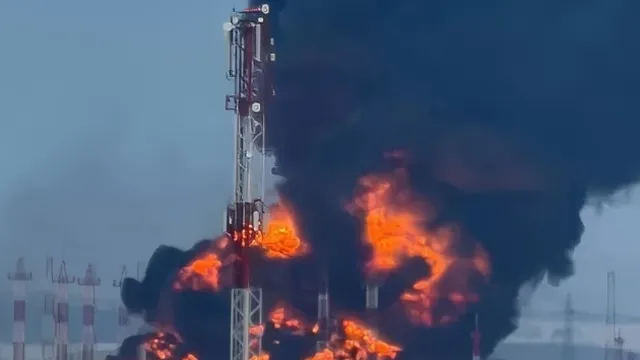
Drones strike Kaleykino oil pumping station in Tatarstan
Drones strike Kaleykino oil pumping station in Tatarstan
- A drone attack occurred at the Kaleykino oil pumping station near Almetyevsk, Tatarstan.
- Emergency services responded to multiple explosions reported in the area.
- The facility's strategic role in Russia's energy export underscores the significance of this incident.
Story
In Russia's Tatarstan region, specifically near the city of Almetyevsk, a drone attack took place on the night of February 23, targeting the Kaleykino oil pumping station. Local residents reported a series of explosions and the ensuing fire that engulfed the facility. Authorities indicated that emergency services were mobilized to manage the situation and stated there was no immediate threat to the local population. However, the incident has raised concerns regarding the safety of critical infrastructure in the region. The Kaleykino oil pumping station is recognized as a significant hub in the energy supply chain, operationally linked to Transneft-Prikamye, a subsidiary of Transneft, Russia's leading oil transport company. This facility plays a pivotal role in receiving and distributing oil from various regions, including Western Siberia and Tatarstan, through major trunk pipelines such as the Druzhba route, significantly influencing Russia’s oil export capabilities. Following the drone strikes, areas around Almetyevsk observed multiple explosions, with witnesses describing bright flashes lighting up the night sky. Airports in Kazan and Nizhnekamsk were temporarily shut down as a precautionary measure, and authorities urged local residents to stay indoors. The rapid emergency response included both firefighters and medical services, illustrating the urgency and potential gravity of the situation. This attack is part of a broader pattern of drone-related incidents in Russia, reflecting increasing tension and hostilities connected to ongoing geopolitical conflicts. The Kaleykino facility, due to its location and importance in the oil supply network, has come under scrutiny as it is linked to both local economic conditions and Russia’s international oil trade endeavors during the current military operations. This incident serves as a reminder of the vulnerabilities faced by such crucial assets in times of conflict.
Context
The Kaleikino oil pumping station plays a critical role in the energy infrastructure, serving as a key hub for the transportation and distribution of oil. Located strategically, it enables the efficient and safe transfer of crude oil and petroleum products from extraction sites to refineries and distribution networks. This functionality is vital not only for supporting regional energy demands but also for contributing to the national energy security. With the rise in global energy consumption, the significance of such facilities has been magnified, necessitating advanced technologies and operational practices to ensure reliability and safety. The operational efficiency of Kaleikino is supported by state-of-the-art pumping technology and robust maintenance protocols that aim to minimize downtime and optimize flow rates. This station is also equipped to handle fluctuations in supply and demand, ensuring a steady flow of oil even during peak usage periods. Moreover, its design incorporates environmental safeguards and safety measures to prevent spills and leaks, which could have serious ecological consequences. As regulatory standards surrounding environmental protection in energy operations continue to evolve, the Kaleikino pumping station has adapted by implementing best practices that prioritize sustainability. In terms of economic impact, the Kaleikino oil pumping station not only provides jobs directly associated with its operations but also spurs additional employment opportunities in ancillary sectors, such as construction, maintenance, and transportation. Local communities benefit significantly from the economic activities generated by the station, which stimulates regional growth and development. Furthermore, the stability and reliability of oil supply from the pumping station enhance investment attractiveness in the region by providing a stable energy source for industries and businesses. In conclusion, the Kaleikino oil pumping station is a cornerstone of the local and national energy framework. Its operational capabilities, commitment to environmental stewardship, and contribution to the economy underscore its significance in the modern energy landscape. As energy dynamics continue to evolve with growing emphasis on renewable sources and sustainability, the role of traditional oil infrastructure like Kaleikino remains essential in bridging current energy needs with future solutions.


