

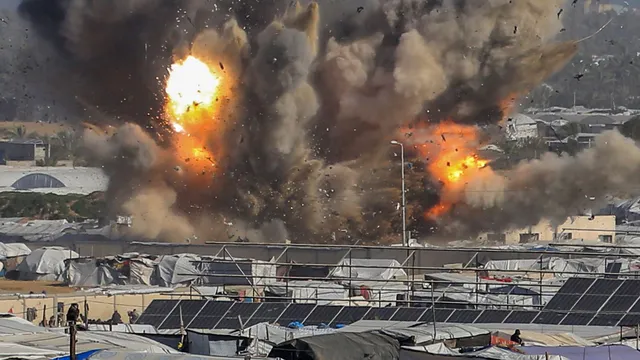
Israel reopens Rafah crossing for Palestinians after nearly two years
Israel reopens Rafah crossing for Palestinians after nearly two years
- Israel will allow limited movement of people at the Rafah crossing for the first time since May 2024.
- The reopening is part of an effort to facilitate returns for individuals who left Gaza during the conflict.
- The crossing's opening reflects a significant, albeit limited, step toward improving humanitarian conditions for Palestinians.
Story
Israel is set to reopen the Rafah border crossing between Gaza and Egypt on February 1, 2026, marking the first effective opening since the Israeli military took control of the crossing in May 2024. The crossing will allow limited movement of people only, aiming to facilitate the return of residents who left Gaza during the war while ensuring security protocols through coordinated vetting by Israel and Egypt. The reopening follows significant discussions over U.S. President Donald Trump's ceasefire plan, which emphasizes restoring peace and stability in the region. The crossing, crucial for Palestinians in Gaza, has been closed for nearly two years, impacting over two million residents who faced dire humanitarian conditions amidst ongoing conflict. Humanitarian organizations have reported severe shortages of basic necessities and medical treatment in Gaza. As the crossing reopens, it will initially permit only a small number of individuals—reportedly around 150 people to return daily from Egypt to Gaza, with no restrictions on those leaving for medical care or other necessities. Each individual intending to pass through the crossing must undergo a stringent security clearance process conducted by Israeli authorities and monitored by European Union officials. Medical evacuations are prioritized, with initial provisions for up to 20,000 individuals needing care outside of Gaza. The reopening signifies a critical step for many war-wounded Palestinians seeking medical treatment and for those wishing to return home. Despite this opening, concerns remain about the broader humanitarian crisis in Gaza, compounded by Israeli restrictions on aid deliveries and the complexities of dual-use item inspections. The infrastructure in Gaza remains heavily damaged from prolonged conflict, with a large portion of the population displaced. The reopening also highlights the ongoing struggles between humanitarian needs and security measures, emphasizing the complexity of the situation that continues to unfold in the region.
Context
The reopening of the Rafah crossing has significant implications for humanitarian efforts in Gaza, which has long faced restrictions affecting the daily lives of its residents. The crossing, located on the border between Gaza and Egypt, serves as a critical point for the entry of various humanitarian aid supplies, including food, medical supplies, and other essentials. With access historically limited due to political conflicts and security measures, the recent reopening presents an opportunity to address some of the urgent and dire needs of the population. The flow of goods through this crossing can substantially alleviate the increased strain on local resources and health services, which have been overwhelmed by years of conflict and economic challenges. Recent evaluations indicate that the effects of the crossing's reopening are profound, particularly in light of the recent surges in humanitarian crises within Gaza. The restarting of aid deliveries is vital for restoring a sense of normalcy and improving the living conditions for many Gazans. The influx of supplies not only addresses immediate needs but also strengthens infrastructure and public services. As a result, organizations providing aid can more effectively target their efforts, focusing on the most vulnerable groups, including children, the elderly, and those with disabilities. Moreover, the reopening has the potential to boost local economies by allowing for the importation of goods that can stimulate trade and commerce. The implications of the Rafah crossing's reopening reach beyond mere logistics; they also encompass broader socio-political themes and humanitarian goals. Local NGOs, the UN, and other international aid organizations have emphasized the significance of this crossing as a lifeline for Gaza. However, challenges remain regarding the long-term sustainability of these efforts. The inconsistent nature of border openings, exacerbated by ongoing regional tensions, threatens the reliability of aid and the ability of humanitarian organizations to plan effectively for the future. Long-term strategies, including diplomatic efforts aimed at stabilizing the region, will be essential to ensure that these openings can continue and expand over time. In conclusion, while the reopening of the Rafah crossing marks a critical step forward in boosting humanitarian efforts in Gaza, it needs to be viewed within a broader context of ongoing regional challenges. Sustained advocacy and cooperation among international stakeholders will be necessary to ensure that this progress leads to lasting improvements in the living conditions of Gaza's residents. The complex interplay between humanitarian needs, political realities, and operational logistics will require a balanced approach, allowing for continued support and enhanced resilience in the face of ongoing challenges.


