

China strengthens naval presence with far-sea warfare drills
China strengthens naval presence with far-sea warfare drills
- China has been deploying warships for far-sea military drills, indicating an expansion of maritime capabilities beyond its coastline.
- Recent military exercises include the naval task force led by the CNS Hainan, conducting significant training operations in the Pacific.
- These developments signal China's intention to challenge US naval dominance and reshape regional security dynamics.
Story
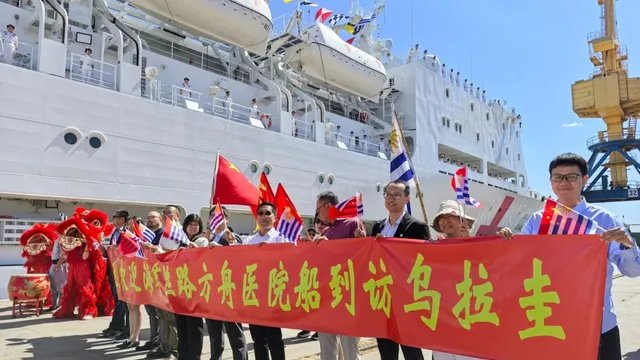
In recent months, China has been intensifying its naval operations in far seas, reflecting the country's ambition to modernize its military capabilities. The Chinese navy has deployed various vessels, including the amphibious assault ship CNS Hainan and destroyer CNS Yan'an, for training exercises aimed at enhancing its operational readiness. Notably, this activity includes large-scale drills that challenge traditional military boundaries, extending beyond regional waters into the wider Pacific area. The drill locations, including the Philippine Sea, were monitored by Australian naval forces as Beijing strives to project its strength. This naval maneuvers not only highlight the quantitative expansion of the People's Liberation Army Navy (PLAN), but also signify a strategic response to perceived threats, particularly from the United States. The United States projects its naval power in the region, and China's activities can be seen as a countermeasure aimed at improving its deterrent capabilities against American forces. The Chinese Defense Ministry has publicly exhibited footage of drills demonstrating missile firings and operational capabilities, which forms part of a broader agenda to assert China's military presence on the global stage. In addition to military operations in the western Pacific, China has also expanded its presence in the Western Hemisphere. The CNS Silk Road Ark, a naval hospital ship, has embarked on a medical service mission throughout Latin America. Its recent stop in Uruguay marks a significant step in China’s efforts to enhance bilateral relations with countries in the region. The deployment reflects a strategic shift as China seeks to establish a foothold in areas traditionally influenced by the United States, thereby challenging the US's long-standing dominance in the Western Hemisphere. As China continues to engage in these naval exercises and diplomatic outreach, the effect could lead to regional powers reassessing their security strategies. This evolving situation presents a significant challenge for the US, which must consider how to reinforce its own presence while managing its commitments across multiple global fronts. China’s naval activities, coupled with its military and strategic initiatives in Latin America, are likely to reshape the geopolitical landscape in both the Pacific and beyond.
Context
China's naval capabilities have undergone significant development in recent years, positioning the People's Liberation Army Navy (PLAN) as a formidable maritime force. As of 2026, China boasts one of the largest navies in the world, with a fleet that includes advanced aircraft carriers, submarines, destroyers, and various support vessels. The addition of modern warships and sophisticated technology has transformed the PLAN into a vital component of China's national defense strategy and regional power projection. The gradual expansion of the navy has been driven by an increasing focus on securing maritime interests, navigating strategic waterways, and asserting territorial claims in the South China Sea and beyond. One notable aspect of China's naval enhancement has been the construction of aircraft carriers, with the Liaoning being the first to enter service. The newer Fujian, equipped with advanced launch systems, signifies China’s intention to enhance its naval aviation capabilities. This advancement allows for improved operational flexibility and the ability to project air power over greater distances. Additionally, with a growing number of destroyers and frigates featuring advanced missile systems, the PLAN is equipped for various modern warfare scenarios, including anti-access/area denial (A2/AD) strategies aimed at countering foreign naval operations in its vicinity. Submarine capability has also received substantial investment. China's nuclear and diesel-electric submarines are increasingly regarded as a key component of its deterrence strategy. The deployment of stealthy submarines designed for anti-ship and anti-surface warfare underscores this growing emphasis on underwater strength. Furthermore, China's expanding network of naval bases and logistical support hubs throughout the Indo-Pacific region enhances the PLAN's operational range and effectiveness. These bases not only facilitate long-range missions but also improve China's ability to respond to regional crises. The development of unmanned naval vehicles, including drones and autonomous surface vessels, indicates China's pursuit of technological innovation within its naval operations. This capability has the potential to augment traditional naval forces, enhancing surveillance, reconnaissance, and combat effectiveness. Overall, the rapid modernization of China's navy reflects its strategic priorities and ambitions on the global stage, raising questions about regional security dynamics and the future of naval warfare in a multipolar world.


