

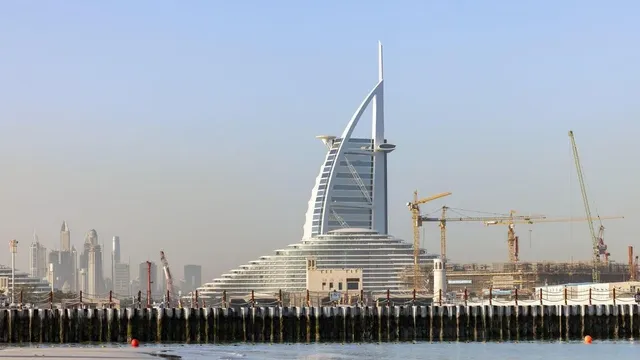
Developers face dire market challenges amid rising risk in UAE's property sector
Developers face dire market challenges amid rising risk in UAE's property sector
- The UAE property sector is facing a downturn following recent strikes on Iran.
- Developers are seeing shares plummet as investor confidence drops and risk premiums increase.
- Long-term challenges loom for the property market as new supply exceeds population growth.
Story
In the wake of heightened tensions sparked by recent strikes on Iran, the UAE property sector is grappling with a major shift in demand dynamics. Many developers, previously experiencing rapid sales of off-plan properties, are now dealing with a substantial contraction in investor interest. This change was notably highlighted on March 4, 2026, when shares in both Dubai and Abu Dhabi developers took a significant hit. Market responses indicate that investor confidence has significantly waned, prompting comments from industry experts about the rising risk premium associated with UAE real estate investment. For the last two decades, both Dubai and Abu Dhabi have undergone substantial transformation driven by ambitious construction projects. Following the Covid-19 pandemic, these changes accelerated as the UAE's tax-free environment, liberal visa policies, and economic reforms attracted a wave of wealthy migrants. Notably, property investments surged, particularly from Russians seeking refuge from conflict, alongside investments from billionaires and hedge funds enticed by a favorable business climate that aimed to position the UAE as a competitive global financial hub. Statistics indicate that Dubai's real estate prices surged over 60% between 2022 and early 2025, showcasing a robust growth trend. However, as of early March 2026, the landscape is beginning to shift. Analysts are signaling concerns regarding an oversupply of residential units that is expected to flood the market. Particularly alarming is JPMorgan's analysis suggesting that Dubai's anticipated demographic growth may not effectively absorb the influx of 300,000 to 400,000 new housing units projected to be completed by 2028. As this surge in supply aligns with a downturn in foreign investor appetite, experts voice concerns that the UAE's property sector could face significant long-term challenges. The recent strikes on Iranian sites have coincided with this influx in housing development, creating an unwelcome environment for new investments. As property developers brace for further fallout from geopolitical tensions, many are being forced to rethink their investment strategies. The pressures weigh heavily as international lenders may scale back new loans, potentially leading to forced asset sales should the uncertainties continue. Consequently, with ongoing conflicts and the changing financial landscape, the outlook for the UAE property sector appears increasingly precarious, raising alarms about its future stability.
Context
The ongoing geopolitical tensions have significant implications for the UAE property market, influencing both investor sentiment and market dynamics. The UAE, being a strategic hub connecting the East and West, is sensitive to fluctuations in regional stability. Recent years have witnessed escalating tensions in the Middle East, particularly involving nations such as Iran, Saudi Arabia, and other Gulf Cooperation Council (GCC) countries. These dynamics often lead to fluctuations in investor confidence, thereby impacting real estate demand and pricing in the UAE. While some investors may seek to capitalize on perceived instability by investing in relatively secure markets like the UAE, others may choose to withdraw due to heightened risks. As geopolitical tensions evolve, the UAE's position as a safe haven becomes increasingly influential. Investors from volatile regions often turn to the UAE for its stable economic environment, tax benefits, and world-class infrastructure. The government's continuous efforts toward diversifying the economy away from oil dependence, along with initiatives to attract foreign direct investment, bolster the country's attractiveness to potential buyers. High-net-worth individuals and international corporations are drawn to the luxury segment of real estate, contributing to upward pressure on property prices despite broader economic challenges. Furthermore, shifts in foreign policy and alliances also play a critical role in shaping the property market. For instance, the UAE's normalization of relations with Israel through the Abraham Accords has led to increased Israeli investments in the UAE, notably within the real estate sector. This influx could serve as a counterbalance to negative sentiments arising from other regional conflicts. On the other hand, adverse developments in the geopolitical landscape could catalyze capital flight or reduced investment from neighboring countries, affecting local demand. In summary, the impact of geopolitical tensions on the UAE property market underscores the intricate interplay between regional stability and investment behavior. While tensions in the Middle East present challenges, the UAE's resilient economy, strategic position, and ongoing efforts to build an attractive investment landscape continue to foster growth and interest in the real estate sector. Thus, ongoing vigilance and proactive measures in response to evolving geopolitical contexts remain essential for stakeholders in the UAE property market.


