

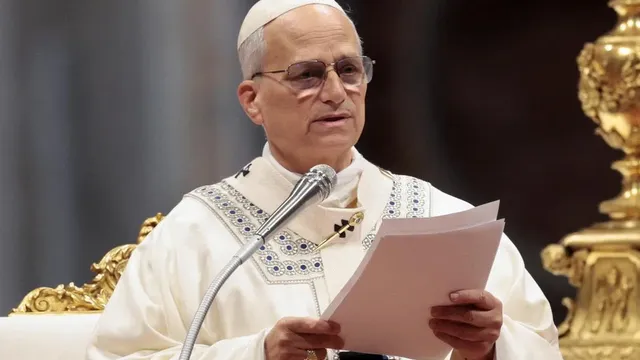
Pope Leo urges independence for Venezuela amid U.S. control efforts
Pope Leo urges independence for Venezuela amid U.S. control efforts
- On January 4, 2026, Pope Leo addressed Venezuelan sovereignty amid U.S. actions to topple President Nicolas Maduro.
- He emphasized the need to uphold human rights and the rule of law as central tenets during his address.
- Pope Leo's statements call for peace and justice, advocating for the welfare of the Venezuelan people as the situation evolves.
Story
On January 4, 2026, in Vatican City, Pope Leo expressed deep concern for the situation in Venezuela following the U.S. government's toppling of President Nicolas Maduro. During his weekly Sunday prayer at St. Peter's Square, the pontiff emphasized the importance of respecting Venezuela’s sovereignty and human rights in accordance with the country's constitution. Pope Leo had previously criticized the possibility of military force against Maduro and insisted that any action should prioritize the welfare of the Venezuelan people. Following this, U.S. President Donald Trump announced plans for the U.S. to take control of Venezuela's governance, citing the necessity for a managed transition after capturing Maduro, who is awaiting trial in New York on drug charges. The developments come in the wake of longstanding tensions surrounding Maduro, known for his autocratic rule and the country’s economic decline under his leadership. Venezuela has experienced significant unrest, with previous protests against Maduro’s regime being met with violent suppression. As the situation escalated, many Venezuelans were reported to be stocking up on essentials, reflecting a climate of uncertainty and fear throughout the country. International responses to Trump’s decision have been mixed, highlighting concerns over the legality of seizing a foreign leader and the potential for another prolonged U.S. military involvement in South America. World leaders have recalled the consequences of past U.S. interventions, raising alarms over similar patterns that unfolded in Iraq and Afghanistan. Ensuing discussions reveal the deep divisions over how to approach the Venezuelan crisis, with many advocating for diplomatic dialogues rather than forceful interventions. The implications of Pope Leo's statements resonate widely, as he appeals for peace and justice for the Venezuelan people at a time when their future hangs in the balance. Many Venezuelans, particularly those in exile, expressed relief at the ousting of Maduro, though they remain cautious about U.S. intentions and the impacts of outside control on their homeland. The overall sentiment among locals is one of trepidation, as living conditions and governance continue to falter in the face of fluctuating political dynamics, heightened by international interventions.


