

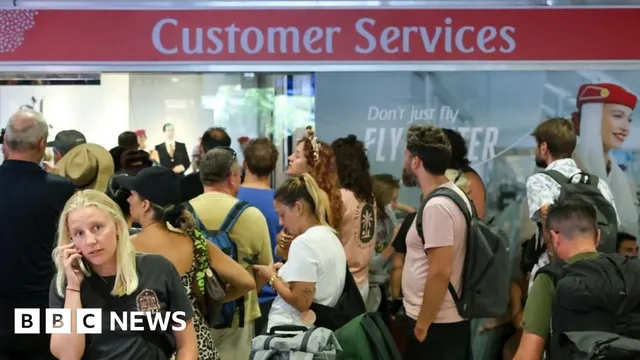
Middle East flight chaos disrupts hundreds of thousands of travelers
Middle East flight chaos disrupts hundreds of thousands of travelers
- The Middle East has seen significant aviation disruptions due to recent geopolitical tensions involving the US, Iran, and Israel.
- Major airlines have canceled numerous flights from pivotal hubs like Dubai and Doha, impacting hundreds of thousands of passengers.
- Travelers need to understand their rights and options for rerouting or refunds amid ongoing travel chaos.
Story
In recent days, the Middle East has faced significant turmoil affecting air travel, particularly due to US and Israeli military actions targeting Iran. As a result of these strikes and Iran's subsequent response, major aviation hubs such as Dubai and Doha have experienced significant disruptions. Airlines operating in these regions, including British Airways and Qatar Airways, have suspended multiple flights, leaving hundreds of thousands of passengers stranded or facing delays. This situation has prompted urgent inquiries from travelers regarding their rights concerning cancellations, rerouting, and refunds. Many passengers are questioning whether they are entitled to direct replacement flights or if their airlines are obligated to rebook them through rival carriers. There's also concern surrounding the availability of alternative arrangements, especially for those who could potentially wait days for a seat. In the current context, a considerable number of travelers are also evaluating the benefits of having booked package holidays, which might offer more robust protections. Passenger rights can vary based on various aspects, including the starting point of the journey, the airline in question, and how the trip was booked. Under certain circumstances, UK and EU regulations may provide passengers with the right to be rerouted as soon as possible, which could include shifting to another airline. Other cases may limit options to refunds, with travel insurance potentially playing a role in providing compensation or alternate arrangements. As geopolitical events continue to unfold and aviation disruptions linger, many travelers are left uncertain about their next steps. Experts advise them to stay informed about their rights and consider their options carefully, especially if they are in foreign countries with complex regulations governing travel disruptions.
Context
The aviation industry is profoundly influenced by geopolitical events, impacting safety, travel demand, operational costs, and regulatory frameworks. Recent geopolitical tensions, trade disputes, and conflicts have disrupted air travel and the movement of goods, leading to significant changes in route planning, market accessibility, and international cooperation. Airlines and aviation stakeholders must navigate a complex landscape where political decisions can alter airspace agreements, impose sanctions, or create travel restrictions, directly affecting operational strategies and profitability. Historically, geopolitical events such as wars, conflicts, and diplomatic relations have determined the viability of certain air routes. For instance, restrictions imposed during conflicts can lead airlines to divert flights or cancel routes, resulting in economic losses and operational challenges. Additionally, heightened security concerns in volatile regions prompt airlines and airports to invest significantly in enhanced security measures. This not only affects operational costs but can also influence consumer confidence, leading to shifts in travel behavior, where passengers may opt for alternatives or avoid certain destinations altogether. International trade agreements and diplomatic relations also play a crucial role in shaping the global aviation landscape. For example, favorable trade deals can enhance air connectivity, while tensions or sanctions may restrict aviation partnerships. The emergence of low-cost carriers has further complicated the scenario, as they often operate under different regulatory environments and can capitalize on market gaps created by geopolitical events. Understanding these dynamics allows industry stakeholders to make informed decisions and adapt to changing realities, thereby ensuring resilience and operational effectiveness. In a post-pandemic world, as air travel demand rebounds, the impact of geopolitical stability becomes even more pronounced. Airlines and airports are urged to stay vigilant and responsive to geopolitical shifts to protect their interests. This includes reassessing risk exposure, employing strategic planning for market diversification, and being proactive in forming alliances to strengthen global operations. Ultimately, the interplay between geopolitical events and aviation will continue to evolve, requiring ongoing analysis and adaptation from all market players.


