

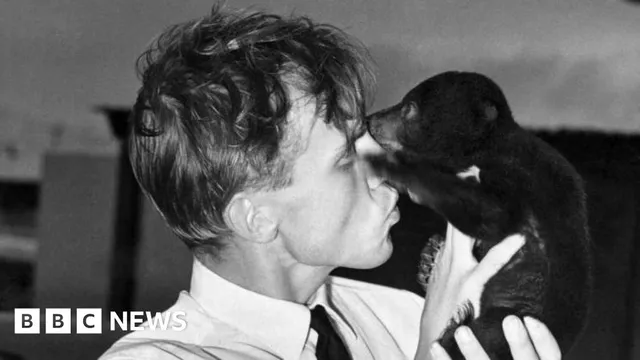
Sir David Attenborough celebrates 100 years of wildlife advocacy
Sir David Attenborough celebrates 100 years of wildlife advocacy
- Sir David Attenborough's love for wildlife developed during his childhood in the East Midlands.
- He often explored natural spaces such as Bradgate Park and Charnwood Forest.
- His impactful contributions and connection to nature are commemorated, especially as he turns 100.
Story
Sir David Attenborough, the legendary broadcaster and naturalist, celebrated his 100th birthday on May 8, 2026. His deep connection to the natural world began during his childhood in the East Midlands of England, where he explored areas like Bradgate Park and Charnwood Forest. These formative experiences fostered his lifelong interest in wildlife. Growing up in a modest family, with his father serving as the principal of University College, Leicester, he had ample opportunity to discover nature during his youth. At family outings, he would visit the picturesque Bradgate Park, located about eight miles from Leicester city center. These experiences served as a gateway to the countryside where his fascination for wildlife bloomed. One memorable aspect of his childhood included fossil hunting on a disused railway line, showcasing his early entrepreneurial spirit as he sold newts to the local zoology department. The University of Leicester has acknowledged Attenborough's significant influence, and his contributions to the field of natural broadcasting are immeasurable. In 2018, he reflected on the impact his upbringing had on him during a visit to the university, noting that he owes much of his love for nature to his time spent there. To commemorate his milestone birthday, a tree was planted outside College House as part of the celebrations held throughout the East Midlands. Sir Nishan Canagarajah, president and vice-chancellor of the university, hailed Attenborough as a tireless advocate for the planet. The legacy of Sir David Attenborough is felt not only in educational settings but also among even the rangers at Bradgate Park. Cara Hewitt, one of the park rangers, expressed that his influence is still significant. She mentioned how the team is committed to caring for the same lands that sparked his initial interest in wildlife. The opening of the Attenborough Nature Reserve in 1966, which occurred approximately three decades after his youthful experiences in the region, further solidified his dedication to nature and conservation in the East Midlands.


