

Trilateral talks in Abu Dhabi aim to resolve Ukraine conflict
Trilateral talks in Abu Dhabi aim to resolve Ukraine conflict
- The first trilateral peace talks between Ukraine, Russia, and the United States took place today in Abu Dhabi.
- Discussions are focused on the status and territorial issues in the eastern Donbas region.
- The meeting represents a critical move towards ending the ongoing war and highlights the need for compromises from both sides.
Story
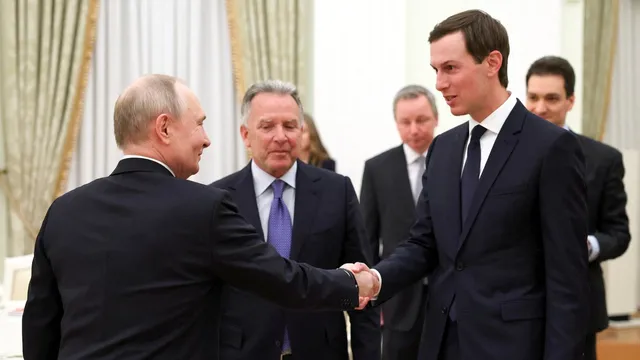
In January 2026, the United States, Ukraine, and Russia initiated their first trilateral peace talks in Abu Dhabi, United Arab Emirates. This significant meeting followed a series of discussions between various leaders, including Ukrainian President Volodymyr Zelenskyy and US President Donald Trump, at the World Economic Forum in Davos. During the discussions in Davos, Zelenskyy emphasized the need for Russia to be prepared for compromises in the ongoing conflict while highlighting Ukraine's challenging position after nearly four years of warfare. The Kremlin confirmed its participation after a substantive meeting between Russian President Vladimir Putin and US envoys in Moscow, where they discussed the conditions for a potential resolution. Russian Admiral Igor Kostyukov led the Russian delegation, while Ukraine was represented by top officials including Rustem Umerov and Kyrylo Budanov. The talks focused primarily on pivotal territorial disputes, particularly regarding the eastern Donbas region encompassing Donetsk and Luhansk. The backdrop to these negotiations includes ongoing military operations in eastern Ukraine, where Russia continues to seek territorial gains. Both sides expressed a cautious outlook on progress, with Russian officials reiterating that without addressing territorial claims, it would be difficult to achieve a durable peace. As Zelenskyy navigates negotiations, he faces pressure to uphold Ukraine's sovereignty while also responding to calls for resolution from international allies. These peace talks signify a crucial attempt to mitigate the ongoing conflict that has resulted in significant loss of life and extensive destruction in Ukraine. The outcome of the discussions, while uncertain, represents an important step in efforts to restore peace in the region and may impact future relations between the involved countries.
Context
The history of the Ukraine-Russia conflict has been marked by a complex interplay of historical grievances, national identity, and geopolitical maneuvering. Although tensions between Ukraine and Russia have roots extending back many centuries, the most recent chapter began in 2014 when Russia annexed Crimea following Ukraine's Euromaidan protests, which led to the ousting of pro-Russian president Viktor Yanukovych. This provided Russia with a pretext to assert its influence over Ukraine, raising international alarm and leading to a series of sanctions imposed on Russia by the West. Subsequently, the conflict escalated as pro-Russian separatists in the Donbas region, supported by Russia, declared independence, prompting a protracted military confrontation that has claimed thousands of lives and displaced many more. The Minsk agreements, aimed at achieving a ceasefire and a political resolution, have been repeatedly violated and have failed to fully resolve the conflict. In 2022, the conflict took a dramatic turn when Russia launched a full-scale invasion of Ukraine, prompting a global crisis. The Ukrainian defense, bolstered by widespread national unity and international support, notably from NATO and the European Union, successfully resisted initial advances, which allowed Ukraine to reclaim significant territories. This period saw the introduction of unprecedented military aid to Ukraine, ranging from advanced weaponry to financial resources, which played a crucial role in its defense efforts. As the war continued into 2023, the geopolitical landscape shifted, with nations reevaluating their defense postures and dependencies, signaling a broader realignment in international relations. Despite ongoing hostilities, the resilience of the Ukrainian people and military has garnered global sympathy, with many countries rallying to provide humanitarian assistance in addition to military support. Diplomatic efforts for peace have remained elusive, with both sides holding firm to their positions. Ukraine continues to demand the restoration of its territorial integrity, encompassing Crimea and the occupied regions of Donbas, while Russia insists on ensuring its own security concerns in the region. As negotiations have faltered and violence flared intermittently, the situation has become entrenched, with little sign of an imminent resolution. Moreover, the economic ramifications of the conflict have reverberated globally, impacting energy supplies, grain exports, and security protocols in numerous countries. As the conflict persists into 2023 and beyond, it continues to shape not only regional dynamics in Eastern Europe but also global security architecture. The enduring nature of the Ukraine-Russia conflict serves as a cautionary tale on the complexities of national sovereignty, the fragility of peace, and the far-reaching consequences of military aggression. The prospect for durable peace remains uncertain, with both sides deeply invested in achieving their respective objectives. The fate of Ukraine and its relationship with Russia will remain pivotal not only for the continent but for global security and stability in the years to come.


