

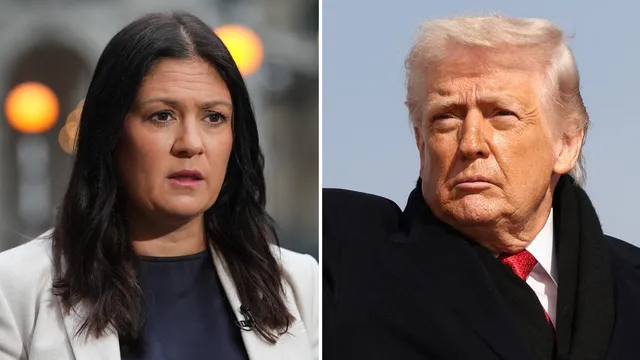
Lisa Nandy insists Greenland's future belongs to its people
Lisa Nandy insists Greenland's future belongs to its people
- Lisa Nandy emphasizes that the UK government will not support changes to Greenland's status without consulting its people.
- Donald Trump announced tariffs as part of an attempt to purchase Greenland, escalating the situation.
- The UK remains committed to its position regarding Greenland, signaling the importance of self-determination in international relations.
Story
The UK government, led by Culture Secretary Lisa Nandy, has taken a firm stance on the issue of Greenland's future, asserting that it is a matter solely for the Greenlandic people and the Kingdom of Denmark. This declaration follows remarks made by US President Donald Trump regarding imposing tariffs on the UK and other European nations in an attempt to purchase Greenland. Trump announced plans to impose a 10% tariff effective February 1, escalating to 25% by June 1, until a deal for the territory's purchase is reached. Nandy communicated that the UK would not support any changes to Greenland without the consent of its residents, remaining steadfast in a non-negotiable position regarding the matter. The tension surrounding President Trump's comments has drawn strong reactions from various political figures, with Sir Keir Starmer criticizing the proposed tariffs as completely inappropriate. The UK government has reiterated its commitment to maintaining strong relationships with the US while also standing firm on its principles regarding Greenland’s sovereignty. Nandy emphasized that any decisions concerning the territory must involve the voices of the people of Greenland themselves, reflecting a broader narrative of self-determination. Additionally, discussions regarding the geopolitical landscape and the importance of the Arctic region were highlighted in the context of the UK government’s recent military initiatives in northern Norway, with plans to enhance marine presence in this strategic area over the next three years. This move underlines the UK’s recognition of the Arctic’s significance not only in terms of national security but also in relation to international relations and climate change. Nandy's remarks signal a pushback against external pressures, particularly from the US, while fostering a stance of empowerment for the people of Greenland. The urgency of this issue has resonated across political platforms, with calls for private negotiations with the US to mitigate the tariff threats being suggested. The larger implications of these developments could shape future discussions on international trade and sovereignty, as global politics continues to evolve. The unfolding situation represents a critical moment for the UK, Denmark, and Greenland, underscoring the importance of self-determination amidst external pressures and the need for cooperative dialogue.
Context
Greenland, the world's largest island, has a unique political status characterized by a high degree of autonomy while remaining part of the Kingdom of Denmark. This relationship has evolved over centuries, particularly with the implementation of the Self-Government Act in 2009, which granted increased powers to the Greenlandic government. This legislative framework allows Greenland to manage a wide array of domestic affairs, including education, health, and fisheries, while the Kingdom of Denmark oversees foreign policy and defense. Nevertheless, discussions surrounding Greenland's political status remain prominent, especially concerning self-determination and the potential for full independence. The prospect of self-determination for Greenland is influenced by its rich natural resources, including significant deposits of minerals and oil. These resources present an economic incentive for independence, as local governance could allow for greater control over resource management and revenues that could contribute to sustainable development. However, the transition to full independence poses challenges, including economic reliance on subsidies from Denmark, which constitute a substantial part of Greenland’s budget. The dialogue around economic sustainability, governance, and social infrastructure is critical in assessing the feasibility of independence. Furthermore, the dynamic geopolitical landscape in the Arctic region has implications for Greenland's political status. As global interest in the Arctic increases, particularly concerning climate change and shipping routes, Greenland's strategic position has attracted attention from various international actors. This growing interest has the potential to shape not only the cultural and political identity of the Greenlandic people but also their approaches to self-determination. A careful evaluation of international relations, security concerns, and environmental considerations is essential in navigating these complex dynamics. In summary, Greenland’s political status is intricately tied to its journey towards self-determination, influenced by its historical ties with Denmark, the economic implications of independence, and the geopolitical realities of the Arctic. The ongoing discussions reflect a desire among many Greenlanders for greater autonomy or even full independence while addressing the economic and political challenges that such a transition entails. As Greenland continues to assert its identity on the global stage, the outcomes of these deliberations will significantly impact its future trajectory and the well-being of its citizens.


