

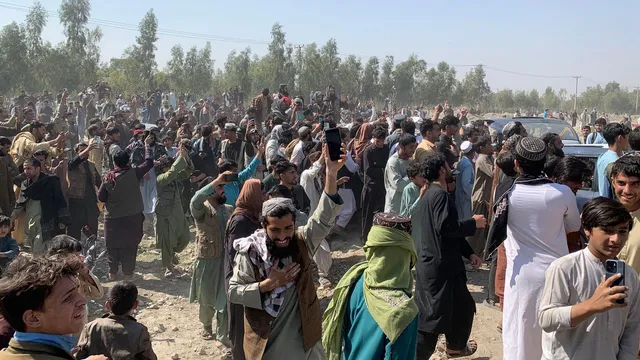
US affirms Pakistan's right to defend against Taliban attacks
US affirms Pakistan's right to defend against Taliban attacks
- The United States supports Pakistan in its military response to Taliban threats along the border.
- Heavy fighting has resulted in significant casualties, including both Taliban forces and civilians.
- Ongoing diplomatic efforts are aimed at de-escalating the situation and addressing humanitarian needs.
Story
Pakistan has recently experienced heavy clashes with the Taliban, prompting significant military actions that escalated tensions along the border with Afghanistan. In response to these clashes, which began after Pakistani airstrikes targeted positions in Afghanistan, the United States expressed its support for Pakistan's right to self-defense against the Taliban, which it designates as a terrorist organization. Pakistani officials have reported that over 330 Taliban forces were killed, while there were civilian casualties, including at least 11 deaths due to the fighting, reflecting the severe humanitarian impact of the conflict. As the violence escalated, Pakistan's Defence Minister Khawaja Muhammad Asif declared an open state of war against the Taliban, indicating the seriousness of the situation from Islamabad's perspective. The situation worsened further with reports of Afghan forces responding to Pakistan’s airstrikes, leading to increased fears among civilians, especially those living near the Torkham border crossing, many of whom have fled to safer areas. Reports also indicated that Pakistan had been transporting Afghan refugees back to safety amid these hostilities. International efforts have emerged as diplomatic channels were activated to address the crisis. Qatar, having previously mediated ceasefires, is coordinating with key nations like Saudi Arabia, Turkey, and China to encourage dialogue and reduction of hostilities. EU officials have also expressed concern and called for an immediate de-escalation, emphasizing the importance of not using Afghan territory to threaten other nations. The United Nations echoed these calls, urging all parties to prioritize diplomatic resolutions to their conflicts. Amidst these developments, the humanitarian situation remains dire, with millions of Afghans in need of aid exacerbated by the ongoing violence. The conflict stems from long-standing issues between Pakistan and the Taliban regarding claims that the Taliban provides safe haven to Tehreek-e-Taliban Pakistan militants, intensifying calls from Pakistan for action against these groups. The current escalation is a continuation of a broader historical context marked by mutual distrust and a complex relationship shaped by decades of political and military tensions in the region.


