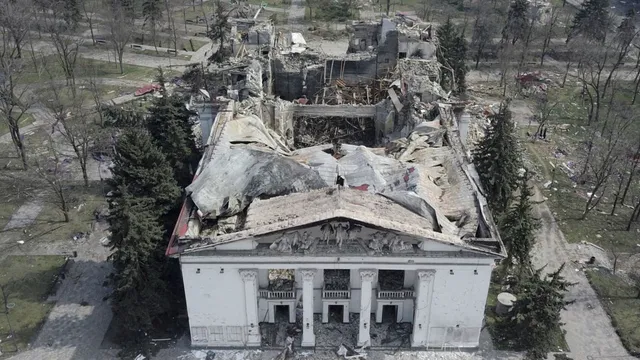
Russia marks reopening of Mariupol theater despite tragic past
- The Mariupol Drama Theater was targeted in a Russian airstrike on March 16, 2022, resulting in the deaths of hundreds of civilians.
- Russian authorities recently opened the reconstructed theater, marking the occasion with a gala concert attended by officials from Russia.
- The rebuilding is seen as a propaganda effort to erase the memory of the attack and promote Russian culture in occupied areas.
Story
In Ukraine, a historic theater in Mariupol has recently reopened more than three years after being destroyed by a Russian airstrike during the invasion that began in February 2022. The attack on March 16, 2022, resulted in the deaths of hundreds of civilians who had sought shelter inside the building. An investigation by the Associated Press later confirmed that approximately 600 people were killed, nearly double the initial estimates. The airstrike was a significant event in the larger context of Russia's siege of Mariupol, which led to the city falling under full Russian control in May 2022. Following the devastation, Russian authorities undertook the reconstruction of the Donetsk Academic Regional Drama Theater, marking its reopening with a ceremonial concert. Notably, at the reopening event, dignitaries including Denis Pushilin, the Russian-installed head of the partially occupied Donetsk region, were in attendance. The reconstruction process was conducted with builders from St. Petersburg, which has had an official relationship with Mariupol since Russia's full occupation of the city. The new building, while visually reminiscent of the original theater, features several structural differences, including modern amenities aimed to signify a new era. The reopening and reconstruction have drawn scrutiny and criticism from various quarters, particularly from the Ukrainian city council that vacated Mariupol. They described the reconstruction as a callous attempt to obscure the realities of a war crime, characterizing it as “singing and dancing on bones.” In their view, the effort to rebuild and the content presented at the theater serve as tools for Russification, prioritizing works from Russian writers over local culture. Critics argue that this redevelopment should not merely be seen as an act of restoration, but rather a strategic move to reshape historical narratives surrounding the conflict. The attack on the original theater was part of a larger assault on Mariupol by Russian forces. The city faced extensive bombardment, leading to widespread destruction and loss of life. In the aftermath, Russian media have portrayed various redevelopment initiatives within Mariupol, focusing on transforming its image post-occupation. However, this narrative has been heavily contested by authorities and citizens who view these developments as attempts to erase the memory of the violence inflicted upon their city and to ignore the tragedy that unfolded during the siege. The reconstruction of the theater is seen by many as emblematic of the ongoing conflict over cultural identity amid the backdrop of war.

Context
The siege of Mariupol, which began in early 2022, has had a profound impact on the civilian population of Ukraine, particularly in the southeastern regions of the country. As a strategic port city, Mariupol was crucial not only for military logistics but also for the economic stability of Ukraine. The intense bombardment and encirclement of the city led to severe infrastructure damage, resulting in a humanitarian crisis that has affected thousands of civilians. The siege lasted for several weeks, during which essential services such as water, food, and medical care were virtually nonexistent. This lack of access to basic necessities contributed to a rapid decline in the health and morale of the residents trapped within the city. In addition to the immediate physical dangers posed by the ongoing conflict, the psychological toll on civilians has been staggering. Many residents witnessed horrific violence, leading to widespread trauma and long-term mental health issues. Families were torn apart as individuals were either killed, injured, or forced to flee. The conflict also exacerbated pre-existing social tensions and divisions within the community, leading to an increased need for mental health support and social services post-siege. The disruption of daily life meant that children were unable to attend school, which may have long-lasting effects on their education and development, contributing to a generation that could face significant challenges in the future. The international response to the siege has demonstrated both solidarity and the complexities of humanitarian aid in conflict zones. Non-governmental organizations and foreign governments mobilized resources to support displaced persons and those still remaining in Mariupol. Efforts included the delivery of food, medical supplies, and psychological support services, although such assistance often faced logistical challenges due to ongoing hostilities and insecurity in the region. Refugees that fled Mariupol sought safety in neighboring areas and countries, creating additional challenges for lawmakers and humanitarian workers in accommodating and aiding the influx of displaced individuals while addressing the needs of their own citizens. In conclusion, the impact of the Mariupol siege on civilians has been widespread and devastating. The immediate humanitarian needs created by the siege, alongside the psychological scars it left on individuals and communities, highlight a critical need for sustained humanitarian support and long-term reconstruction efforts. As Ukraine continues to navigate the ongoing conflict, addressing the deep-seated trauma and rebuilding the community will be essential for fostering resilience and promoting recovery in the aftermath of such significant adversity.