

NASA struggles with SLS as a reliable launch option
NASA struggles with SLS as a reliable launch option
- NASA is experiencing delays and challenges with the Exploration Upper Stage and upcoming Artemis missions.
- There are concerns about the Mobile Launcher 1's ability to sustain the desired flight rate for SLS.
- Experts predict that without substantial changes, lunar landing targets may be pushed back to 2029 or 2030.
Story
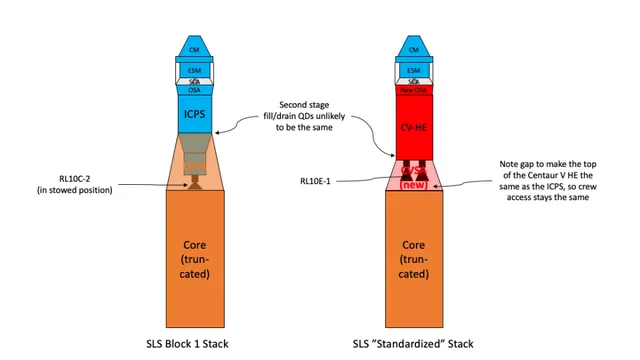
As of March 2026, significant concerns have been raised regarding NASA's Exploration Upper Stage and its lack of progress in getting closer to lunar landings. The organization is facing challenges in its preparations for upcoming Artemis missions, specifically Artemis 3 and 4. Critics suggest that the existing infrastructure, such as the Mobile Launcher 1 (ML1), may not accommodate the desired flight rate, casting doubt on the viability of utilizing new upper stage designs without prior successful flights. Some experts argue that the Chaotic Vehicles (CV) system could offer a solution, but mixed opinions reflect skepticism regarding its timely implementation. Adding to the uncertainty is the ongoing discussion about the Space Launch System (SLS), which has yet to demonstrate the necessary reliability and efficiency that NASA requires for future missions. With potential congressional resistance to canceling the program after Artemis 4, stakeholders are contemplating the best course of action as they see SLS as an integral component of their plans. This situation has raised trepidation among participants involved in the program, who express concern that adapting external components like the Centaur V could disrupt planned timelines. Throughout the commentary surrounding these developments, one trend continues to surface: the need for NASA to standardize its rocket systems across various launches. Some stakeholders are pushing for fewer one-off modifications while others deem such a goal impractical. The debate centers around how to harmonize systems for efficient operation amid diminishing timelines, underscoring the importance of a streamlined approach moving forward. Critics of the current approach emphasize that without structural support from the projected SLS operations, the future lunar missions may experience delays. There appears to be a consensus that without adequate preparation and the right technologies in place, NASA might fall short of its ambitious timeline for successful lunar landings, with a revised target potentially extending to 2029 or 2030. The prospect of resolving these unresolved issues will dictate the organization's ability to realize its lunar exploration ambitions.


