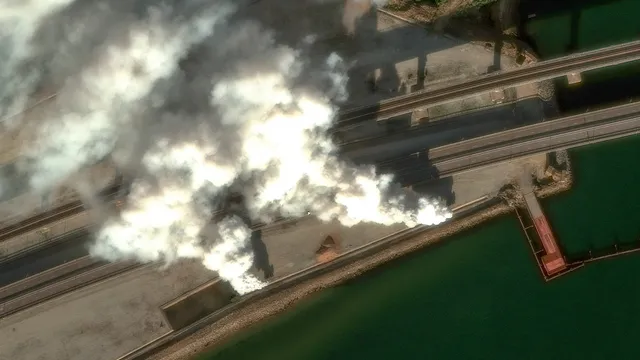
In recent weeks, Ukrainian forces have intensified their attacks on fuel supplies in Crimea, leading to the worst energy crisis in the region since its annexation by Russia in 2014. The Kremlin-appointed head of Crimea, Sergey Aksyonov, reported that overnight strikes resulted in four fatalities and 28 injuries, although he did not disclose the specific targets of the attacks. Following these events, Aksyonov announced that gas sales would be suspended for civilians and non-state companies, allowing fuel only for government agencies responsible for the region's security and functioning.
The situation has escalated as Ukrainian President Volodymyr Zelenskyy confirmed that the attacks were part of a broader strategy to impose long-range sanctions on Russia's energy infrastructure. He highlighted that a Crimean oil depot and an oil transport facility in Russia's Krasnodar region were among the targeted sites. This military strategy aims to weaken Russia's energy capabilities, which are crucial for its operations in the ongoing conflict.
As a result of the attacks, the Crimean peninsula is experiencing significant fuel shortages, with authorities previously limiting gas sales to 20 liters per vehicle per week. This restriction has led to long lines at gas stations, with motorists scrambling to secure fuel. Some individuals have resorted to bringing fuel from Krasnodar via the Kerch bridge, but they face limitations on the amount they can transport. Speculators have taken advantage of the situation, selling gas at inflated prices, further complicating the crisis.
The Kremlin has acknowledged the severity of the fuel crisis and has promised to address the issue promptly. However, the ongoing conflict and the targeted strikes by Ukrainian forces suggest that the energy situation in Crimea may remain precarious for the foreseeable future, as both sides continue to engage in military actions that impact the region's infrastructure and civilian life.