

Trump imposes 25% tariff on all countries trading with Iran
Trump imposes 25% tariff on all countries trading with Iran
- Donald Trump announced a 25% tariff that will be applied to any country doing business with Iran.
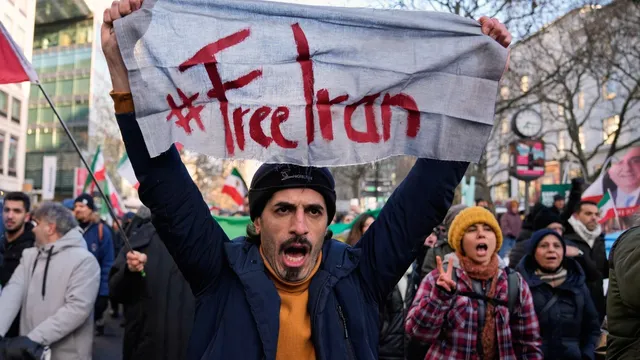
- Mass protests in Iran have resulted in a considerable death toll and international scrutiny.
- The tariffs could exacerbate Iran's economic situation and potential unrest while illustrating the US's strategic choices in addressing human rights violations.
Story
In response to escalating protests and a violent crackdown in Iran, President Donald Trump implemented a significant economic measure by announcing a 25% tariff on any country engaged in business with Iran. This announcement came on January 11, 2026, and was part of a broader strategy to address human rights violations occurring amidst Iran's internal unrest. As the death toll from protests reportedly surpassed 600, with thousands jailed, Trump's administration signaled a strong stance aimed at compelling economic change in Iran. The tariffs are expected to affect major trading partners who have continued to conduct business with Iran, including China, Turkey, India, and several others. Analysts suggest the financial penalties could disrupt Iran's economy significantly, potentially increasing pressures on the Iranian government to address the anger of its citizens regarding economic hardships and political repression. Protests have erupted across the country, fueled by widespread dissatisfaction with governance and a struggling economy, exacerbated by previous sanctions and political instability. Iranian leaders have responded defensively to Trump’s tariffs. They argue that such economic measures may threaten regional stability, with Foreign Minister Abbas Araghchi asserting Iran's readiness for conflict while simultaneously expressing a desire for diplomatic negotiations. The Iranian regime attempts to frame the unrest as predominantly instigated by foreign influences, chiefly the United States, which has led to heightened tensions and a complex geopolitical scenario. The implementation of these tariffs serves as a critical moment, as it is expected to hinder Iran's already strained economy while potentially exacerbating the unrest gripping the country. Analysts point to the necessity for diplomatic engagement, yet Trump's tariffs suggest a preference for economic coercion over dialogue, thus raising concerns over potential escalation into military confrontation should Iran’s response be one of defiance against both domestic dissenters and international pressure.
Context
The history of U.S. tariffs on foreign countries dates back to the very foundation of the nation, illustrating an evolving protectionist policy shaped by both economic necessities and political interests. Tariffs were initially implemented to protect budding American industries from foreign competition, primarily against British imports. Throughout the 19th century, tariffs fluctuated significantly, peaking during the Civil War to fund military efforts. The Tariff Act of 1861 introduced some of the highest rates, resulting in substantial revenue for the government while simultaneously igniting tensions with trading partners. Following the war, the U.S. continued to employ tariffs as a means to stimulate domestic production, with notable legislation such as the Morrill Tariff of 1861 setting a precedent for high protective tariffs in the industrial era. The early 20th century saw a shift towards more aggressive tariff policies, especially during periods of economic downturn. The Fordney-McCumber Tariff of 1922 exemplified this shift by raising duties on imports significantly, reflecting a desire to safeguard American manufacturing in the aftermath of World War I. However, the aftermath of the Great Depression triggered a radical change in tariff policy. The Smoot-Hawley Tariff of 1930 represented one of the highest levels of protectionism in U.S. history, aiming to protect American agriculture but ultimately leading to widespread trade retaliations and exacerbating the economic crisis. The global backlash against high tariffs led to a reevaluation of trade policies and began the movement towards lowering tariffs through multilateral agreements. Post-World War II policies ushered in a more liberal approach to trade, characterized by a concerted effort to reduce tariffs on a global scale. The General Agreement on Tariffs and Trade (GATT) established in 1947 marked a significant step towards multilateral trade negotiations, fostering a framework for reducing tariffs and encouraging international cooperation. By engaging in successive rounds of negotiations, the U.S. played a critical role in lowering tariffs and opening markets, culminating in a significant reduction of trade barriers during the late 20th century. This period led to a remarkable expansion of global trade and integration, benefiting economies worldwide and solidifying the U.S.'s position as a global leader in trade. In the early 21st century, U.S. tariff policy has continued to adapt to changing global dynamics, influenced by economic, political, and social factors. The Great Recession of 2008 prompted a reevaluation of existing trade agreements, leading to increased scrutiny of foreign imports. Recent administrations have seen a resurgence of protectionist sentiments, prominently illustrated by tariffs imposed on China and other nations under the justification of protecting American jobs and national security. The ongoing debates surrounding tariffs reflect deeper issues related to globalization, domestic economic issues, and geopolitical tensions. As such, tariffs remain a key component of the U.S. strategy in navigating complex international trade relationships.


