

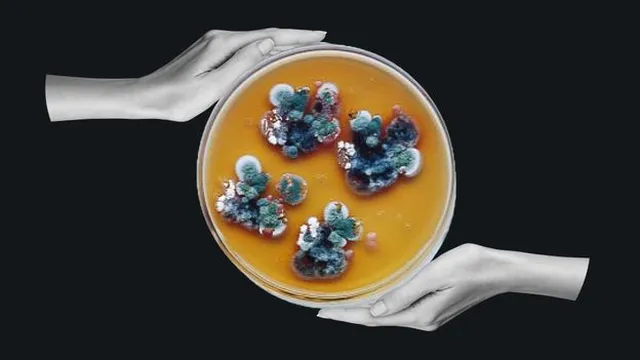
Black fungus at Chernobyl thrives on radiation and challenges our understanding of life
Black fungus at Chernobyl thrives on radiation and challenges our understanding of life
- Research revealed that black mold at Chernobyl survives and grows towards ionizing radiation, with some species using it for energy.
- Zhdanova and Dadachova's studies indicate that melanin plays a key role in these fungi's ability to thrive in radioactive environments.
- These findings could lead to innovative applications in protecting astronauts from cosmic radiation on future space missions.
Story
In 1997, scientist Nelli Zhdanova visited the Chernobyl nuclear disaster site where she discovered several types of black mold thriving in a highly radioactive environment. This mold exhibited radiotropic behavior, growing towards radioactive particles much like plants grow towards sunlight, signaling a potentially unique adaptation to the harsh surroundings. Zhdanova's findings unveiled over 35 fungal species adapting to the considerable ionizing radiation in Chernobyl, with some showing increased growth rates in the presence of radiation. Following this, Ekaterina Dadachova, a nuclear scientist at the Albert Einstein College of Medicine, conducted research confirming that these melanized fungi actually accelerated their growth when exposed to radiation. She introduced the concept of 'radiosynthesis', proposing that the fungi were capable of converting radiation into usable energy, a process still under investigation. Understanding how these fungi metabolize radiation could have significant implications for both ecological research and space exploration, particularly in terms of developing life support systems for astronauts. Researchers have theorized that if melanin, the pigment prevalent in the fungi, acts as an energy transducer, it might pave the way for utilizing similar organisms in extraterrestrial environments. As nations, including the U.S. and China, are planning to establish bases on the Moon and Mars, knowledge gained from Chernobyl's fungi may come in handy to protect astronauts from the harsh cosmic radiation encountered in deep space. Despite the promising potential of these fungi, ongoing studies have shown that not all melanized species respond positively to radiation. For instance, recent experiments indicated no notable growth difference under UV radiation exposure between melanized and non-melanized fungi. Therefore, while the Chernobyl fungi hold exciting prospects for future applications in space, further research is necessary to unravel the exact mechanisms behind their resilience and energy conversion capabilities.
Context
As we look towards the future of human missions to Mars, one of the most pressing concerns is the health and safety of astronauts, particularly regarding exposure to space radiation. Mars, being located outside of Earth's protective magnetosphere, presents a unique challenge in that astronauts will face elevated levels of cosmic radiation, which can increase the risk of cancer, central nervous system effects, and acute radiation syndrome. Therefore, effective radiation protection measures are essential to ensure the success of these missions and the well-being of the crew. Current estimates suggest that a mission to Mars could expose astronauts to radiation levels exceeding NASA's permissible limits for occupational exposure, necessitating innovative and robust protection strategies. Various approaches to radiation protection are being explored that range from physical barriers to pharmacological interventions. One of the most promising strategies involves the use of lightweight shielding materials that can be integrated into the spacecraft design. Researchers are investigating materials like polyethylene, which has shown potential for effectively attenuating radiation while minimizing the mass that needs to be launched, a critical factor for any Mars mission. Additionally, technological advancements may allow for the development of radiation resistant habitats, which could provide astronauts with a safe environment during solar particle events. In parallel with these physical protection methods, there is ongoing research into biological countermeasures that could bolster human resilience against radiation. For instance, studies are examining the potential of antioxidants and other pharmaceuticals that could mitigate radiation damage at the cellular level. Furthermore, understanding the biological mechanisms behind radiation exposure can lead to the development of targeted therapies that could help protect astronauts' health during extended missions. The integration of such strategies into mission planning will be crucial for safeguarding astronaut health on Mars. As we prepare for human exploration of Mars, it is clear that comprehensive strategies for radiation protection are essential. Collaborative efforts among international space agencies, research institutions, and industry stakeholders are vital to address these challenges head-on. The knowledge acquired through these missions will not only assist in protecting astronauts but also pave the way for future endeavors in space exploration. Achieving a successful and safe Mars mission will be a critical milestone in human space exploration, underscoring our ability to innovate and adapt in the face of daunting challenges.


