

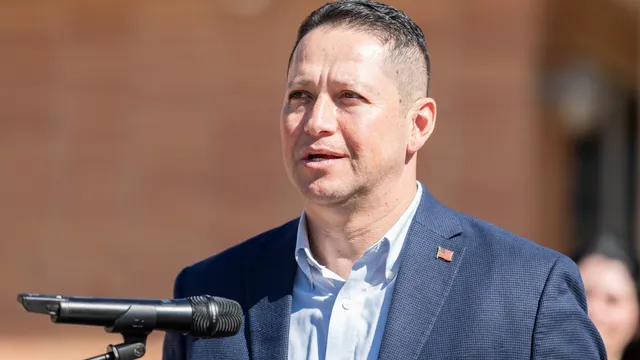
Tony Gonzales drops re-election bid amid affair scandal
Tony Gonzales drops re-election bid amid affair scandal
- Tony Gonzales admitted to an affair with his former aide, whose death by suicide has raised serious questions.
- The House Ethics Committee has opened an investigation into potential misconduct and favoritism regarding the affair.
- He announced he will not seek re-election while continuing to serve out the remainder of his term in Congress.
Story
In the United States, Tony Gonzales, a Republican congressman from Texas, made headlines when he announced he would not seek re-election following a tumultuous few weeks marked by personal and political turmoil. The resignation came after he admitted to having an affair with Regina Ann Santos-Aviles, a former aide, who tragically died by suicide in September 2025. The circumstances of her death, ruled a suicide, added to the emotional weight of Gonzales's admission. Gonzales had been facing scrutiny and backlash after the House Ethics Committee opened an investigation into allegations of sexual misconduct and potential favoritism during his term. This decision to withdraw from re-election was compounded by considerable pressure from Republican leadership, who urged him to focus on addressing the serious allegations while continuing to serve his constituents. In his statement on social media, Gonzales expressed gratitude for his constituents and reaffirmed his commitment to representing them through the remainder of his term. He stated, "After deep reflection and with the support of my loving family, I have decided not to seek re-election while serving out the rest of this Congress with the same commitment I've always had to my district." Gonzales's affair became public knowledge only recently, and he acknowledged exchanging inappropriate messages with Santos-Aviles before her death. These events drew significant media attention, as they occurred against the backdrop of a contentious re-election race. Gonzales was set to face off against pro-gun candidate Brandon Herrera in a runoff after neither candidate achieved a majority in the primary. As the fallout from the scandal continues to unfold, questions remain about the future of Gonzales's political career and the broader implications for the Republican party. While he has chosen not to pursue re-election, the ongoing investigation by the Ethics Committee could take additional turns, impacting his legacy and the public's perception of his time in office. Both Gonzales's personal and political life stand at a crossroads as he navigates the consequences of his actions, leaving observers to speculate on his next steps and the ethical standards expected from elected officials.
Context
The impact of ethics investigations on Texas politicians has emerged as a significant concern, impacting their public image, legislative effectiveness, and potential electoral outcomes. In recent years, Texas has witnessed a surge in ethics inquiries against its political leaders, which has prompted a rigorous examination of the ethical standards and practices that govern political behavior within the state. These investigations often arise from allegations of misconduct, including corruption, fraud, or misappropriation of funds, leading to a climate of heightened scrutiny for public officials. As such investigations unfold, they tend to generate considerable public interest, leading citizens to question the accountability and integrity of their elected representatives. The repercussions of an ethics investigation can be profound for Texas politicians. Firstly, the emotional toll and stress associated with under investigation can detract from their capacity to govern effectively. Politicians embroiled in controversies may find their time and energy consumed by legal battles or public relations efforts rather than by legislative duties. This distraction often hampers their ability to focus on pressing policy issues, thereby impacting their performance and effectiveness. Furthermore, investigations can result in loss of public trust, which is a critical component for political survival; constituents expect their leaders to adhere to high ethical standards, and failure to do so can lead to a loss of support. Public perception is another critical dimension affected by ethics investigations. Media coverage often sensationalizes such issues, leading to headlines that shape public opinion and influence the electoral landscape. Negative press can create a lasting stigma, potentially jeopardizing the career trajectories of those politicians involved. In many cases, politicians find themselves forced to navigate a landscape rife with skepticism, even if they are ultimately exonerated. The fear of reputational damage can compel politicians to modify their behavior, act more cautiously, or even resign from their positions, thereby altering the political landscape in Texas. In conclusion, the impact of ethics investigations on Texas politicians extends beyond mere legal ramifications; it fundamentally influences public trust, legislative effectiveness, and the overall political climate. As the political environment continues to evolve, the importance of maintaining stringent ethical standards becomes increasingly paramount. Consequently, it is essential for Texas lawmakers to cultivate transparency and accountability within their ranks to restore public confidence and ensure that the government operates with integrity.


